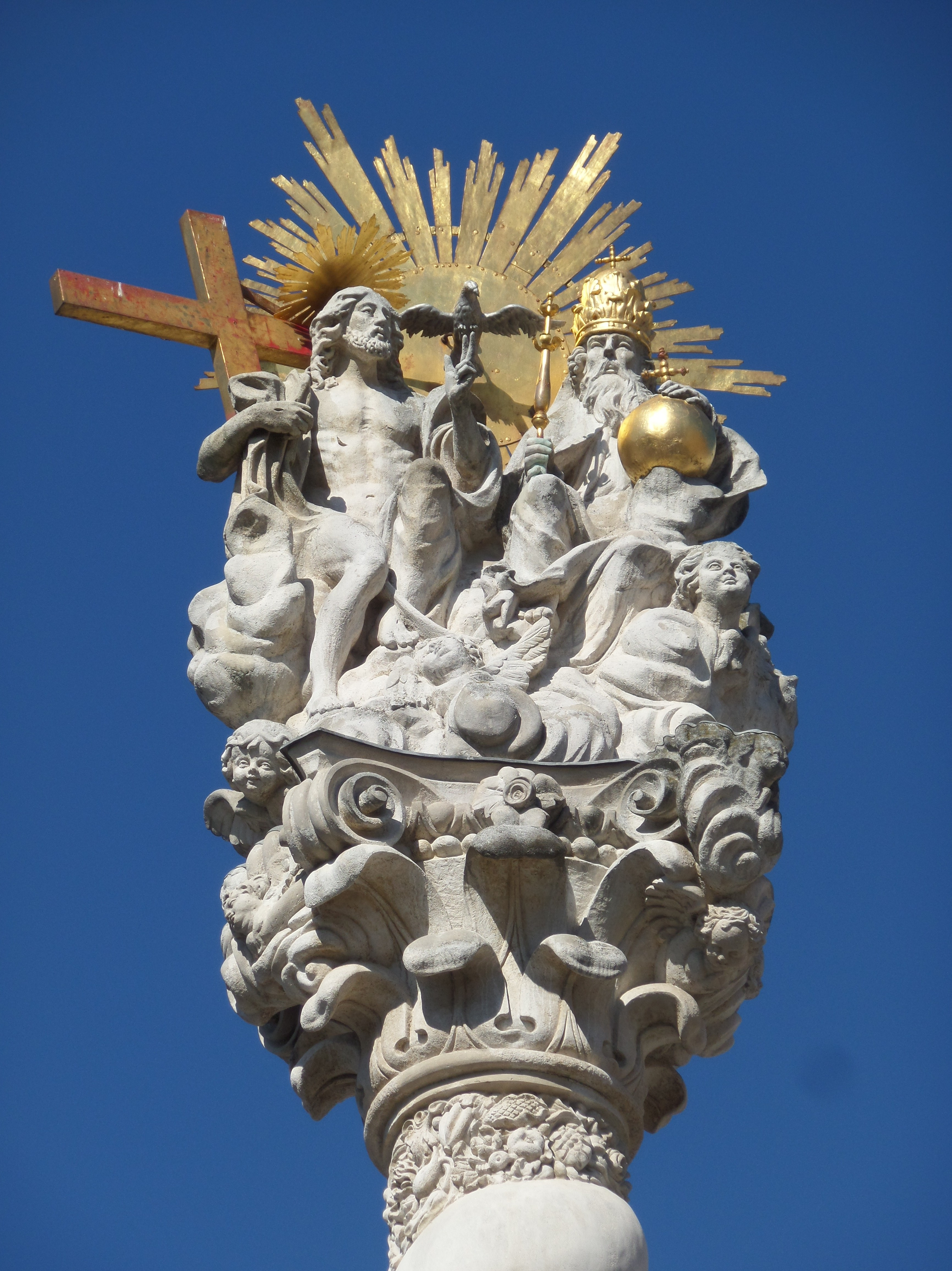
This was a pillar in Sopron built to commemorate those who died from the plague. We were there on the Thursday that week. I do like this representation of the Trinity at the top. One of the curious things we saw on monuments or buildings like this was that they would arrange whatever Latin passage they used on it so that the numbers and letters that were Roman numerals would add up to the date of the construction. These would be in red, instead of just grey.
For these five week days, 12 of us joined together under the lead of Emese to get a head start on getting to know both Hungary and each other before the week of placement tests began at the Kodály Institute. The extra cost was well worth it. By the end of these trips, we had all built friendships with each other that would not have been possible otherwise. I am realizing just how good it is to have a cohesive, cooperative group of friends going into the school year together. In this sense, the long, meaty conversations that filled the hours on the bus going from place to place were the most valuable parts of the orientation week. I have no doubt of the profound impact of having already sparked these true friendships.
Of course, being introduced to Hungary by a local is definitely the right way to go. Besides the wealth of history, language, and folk songs that Emese shared with us, I am positive that her help as a translator meant that we got to hear about fascinating cultural stories that we might not otherwise have heard.
Many of the places we went are UNESCO World Heritage sites.
If you’re ever in Hungary, here’s the shortlist of my favorite spots that we visited:
Eszterházy Castle, where Haydn directed his orchestra.
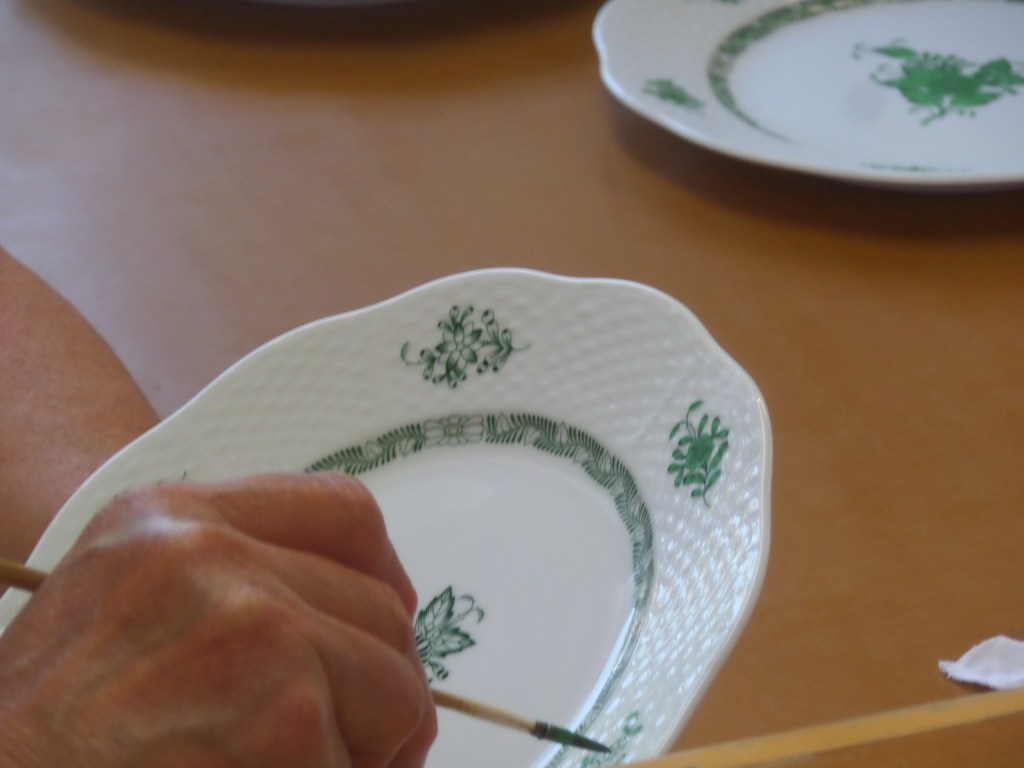
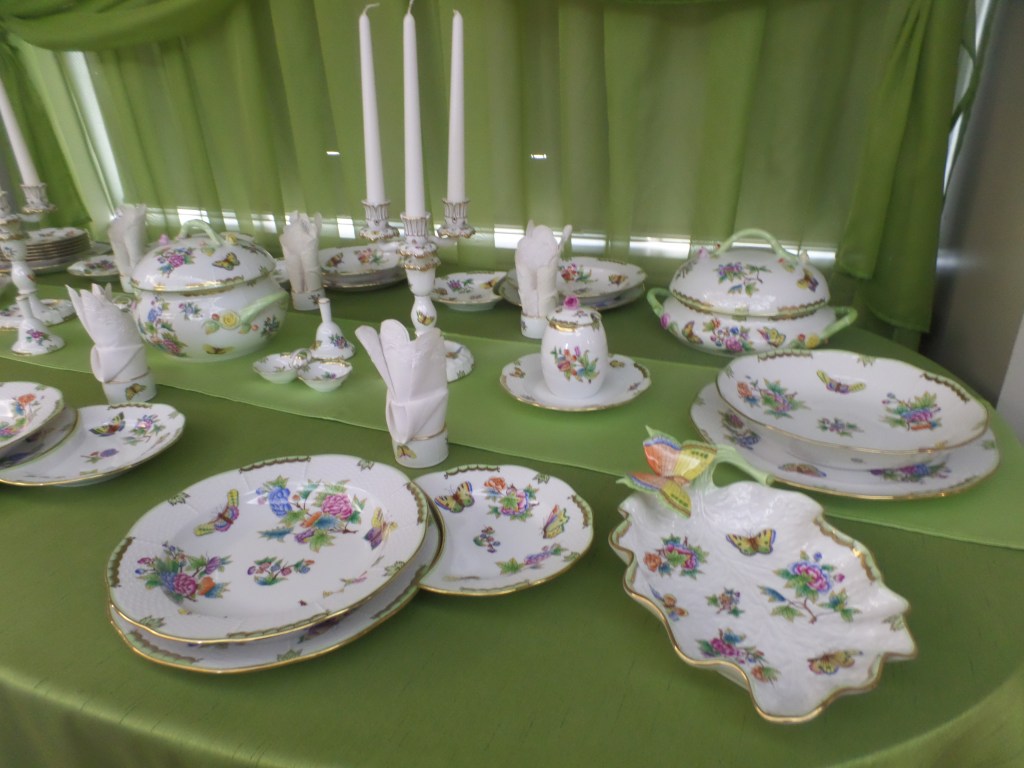
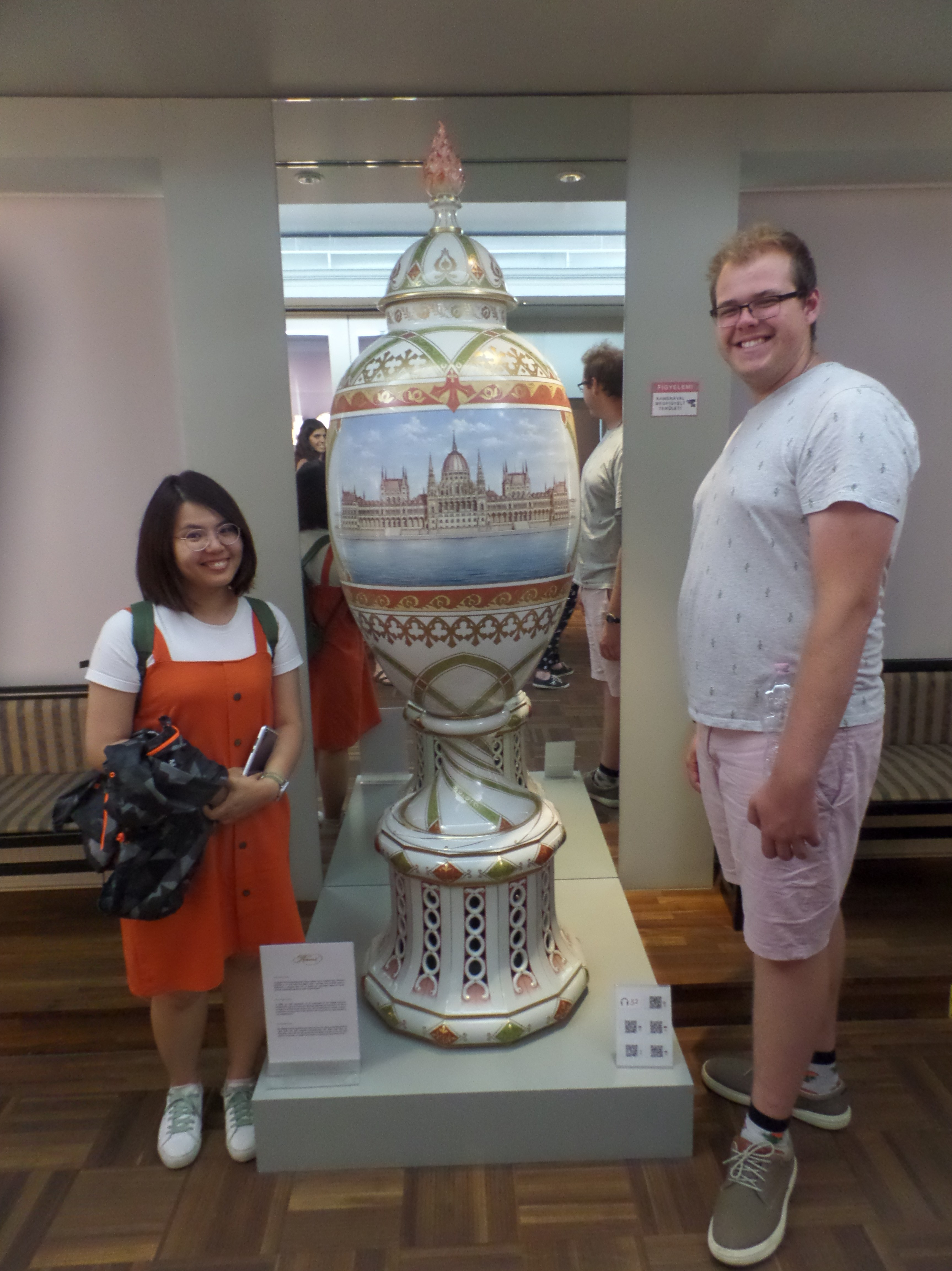
Herend Porcelanium, where the Hungarian porcelain is painstakingly made and painted by hand: 700 trained workers (mandatory 3 years of training), zero automation, flawless workmanship. Queen Victoria once bought an entire custom set for Buckingham.
On to pictures!
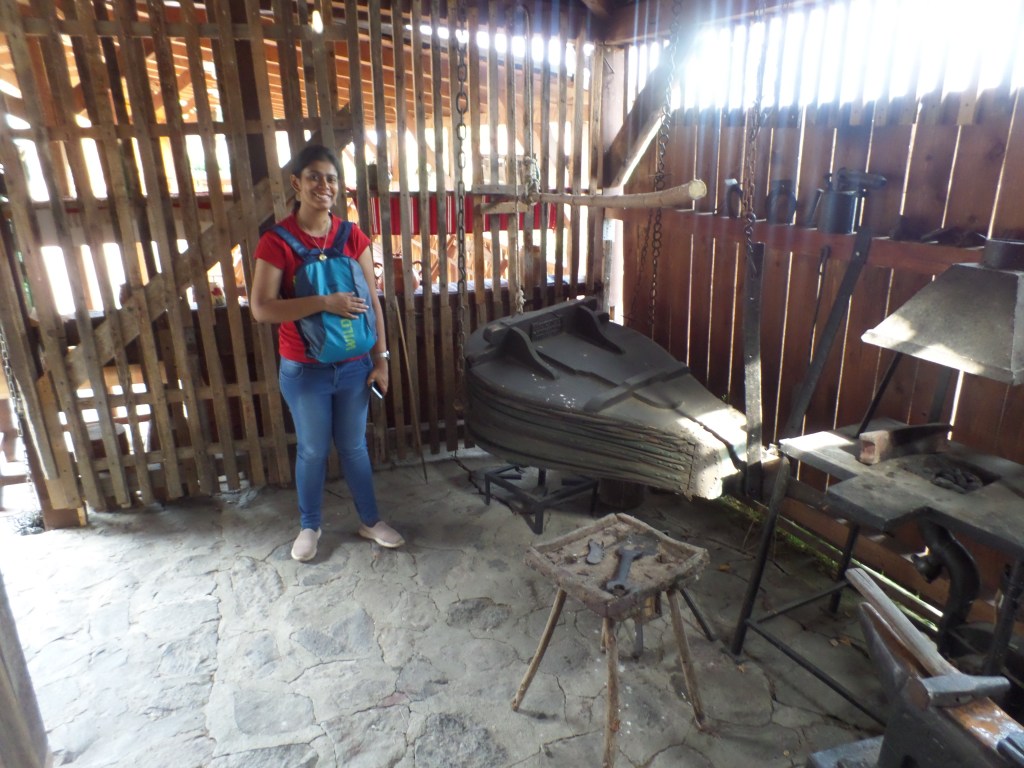
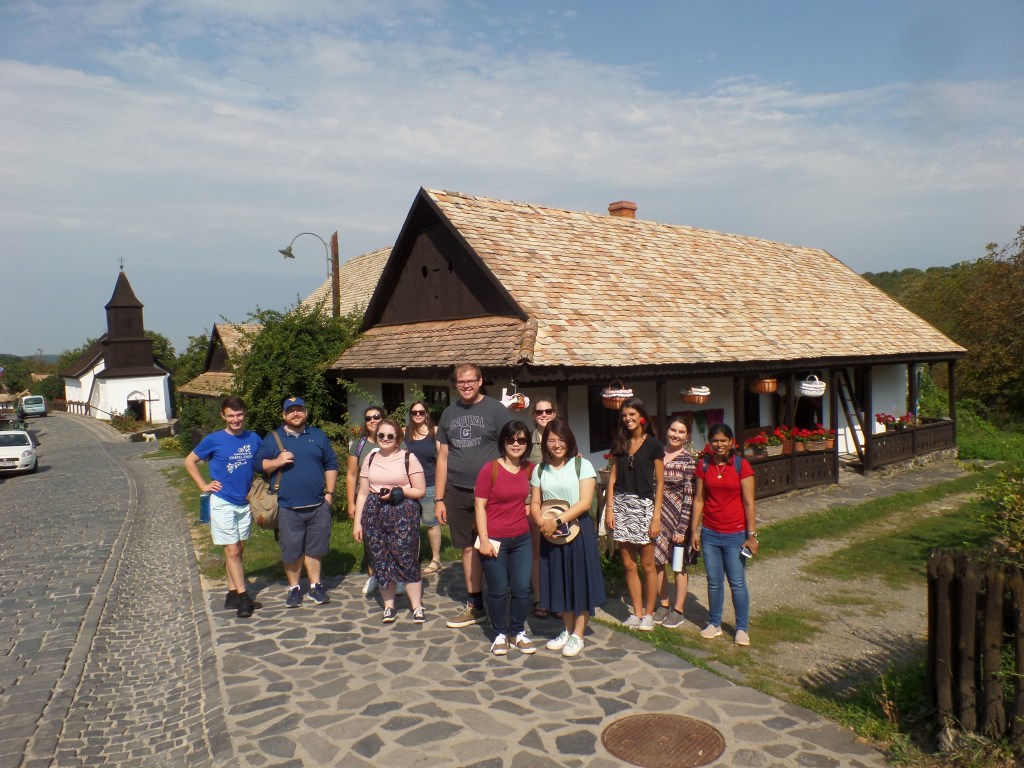
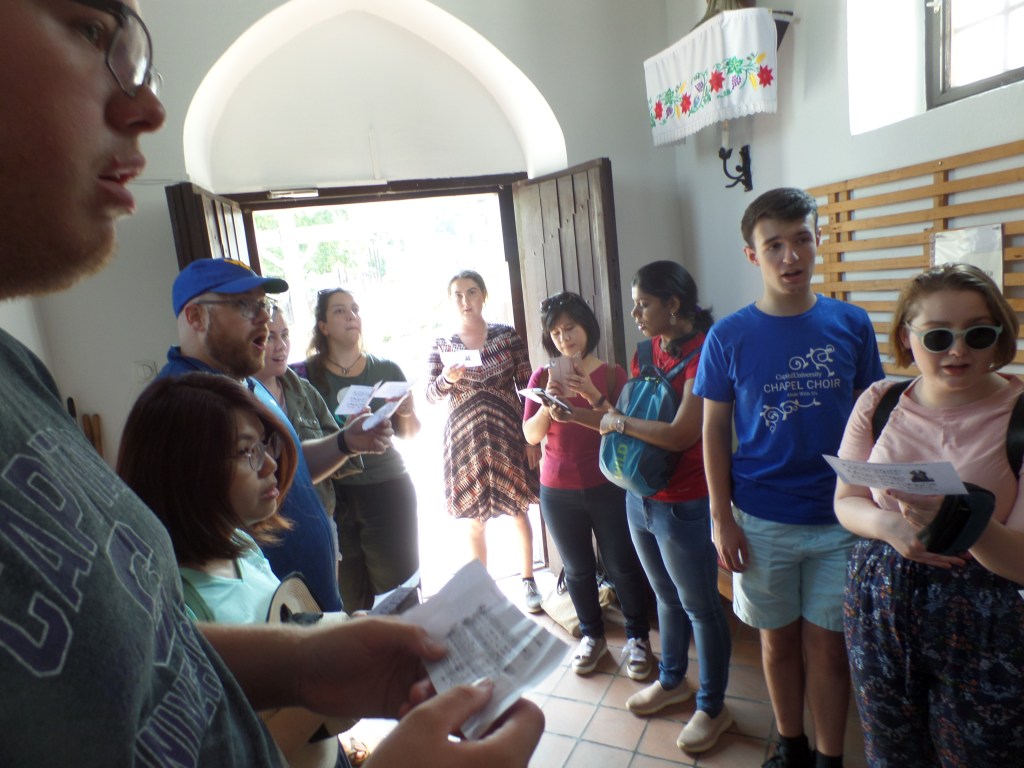
The old town of Hollókö, which was practically left untouched from its rustic state of the past several hundred years. This is a blacksmith’s forge, where we heard that “one person isn’t a blacksmith; two men are half a blacksmith; three men make one blacksmith.” The forge wouldn’t be functional without three. This is Aditi, from India in the picture.Left to right: Jackson (Ohio, my roommate), Robert (West Virginia), Despina (Greece), April (Canada), Emese (Hungary, chaperone), Gareth (Ohio, my roommate), Yanjun (Singapore?), Sarah (Ireland), Carmen (Malaysia?), Theresa (Portugal, one of two others starting the first year of the BA with me), Laura (Australia), Aditi (India).We sung canons for fun every day at every place we went to. This is at the small church in Hollókö.
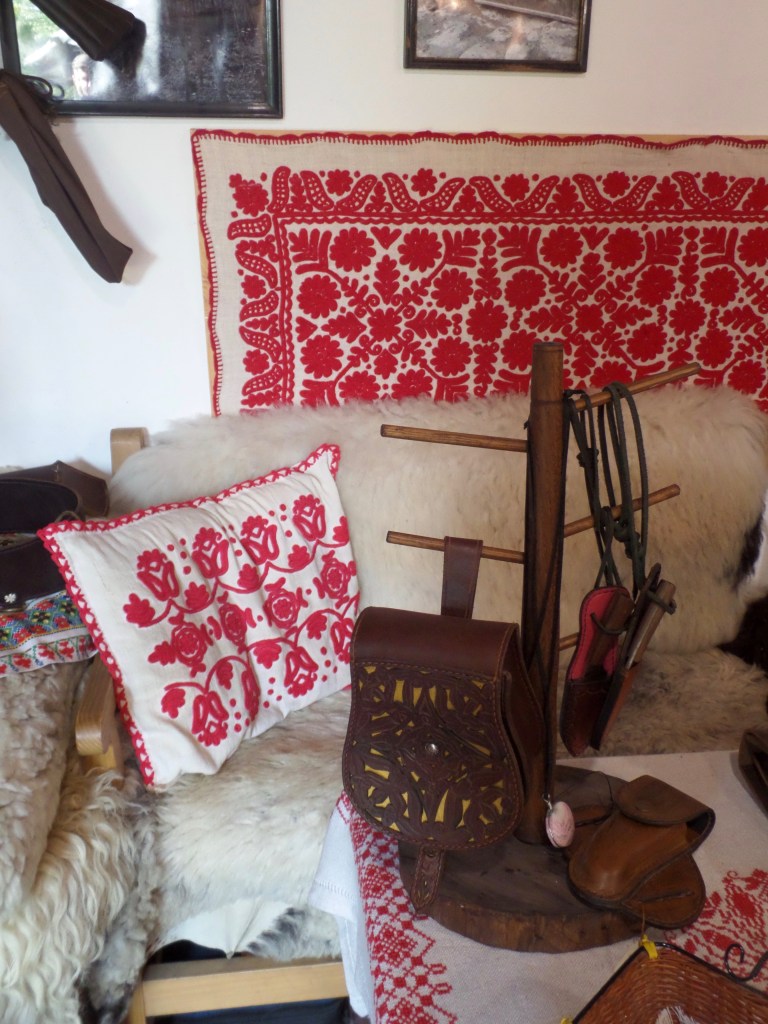
The Hungarians/Magyars have worn the leather case in the foreground since they arrived in Europe. The embroidery has the pattern particular to Hollókö. From what I understand, there are patterns and folk songs specific to almost every little town.
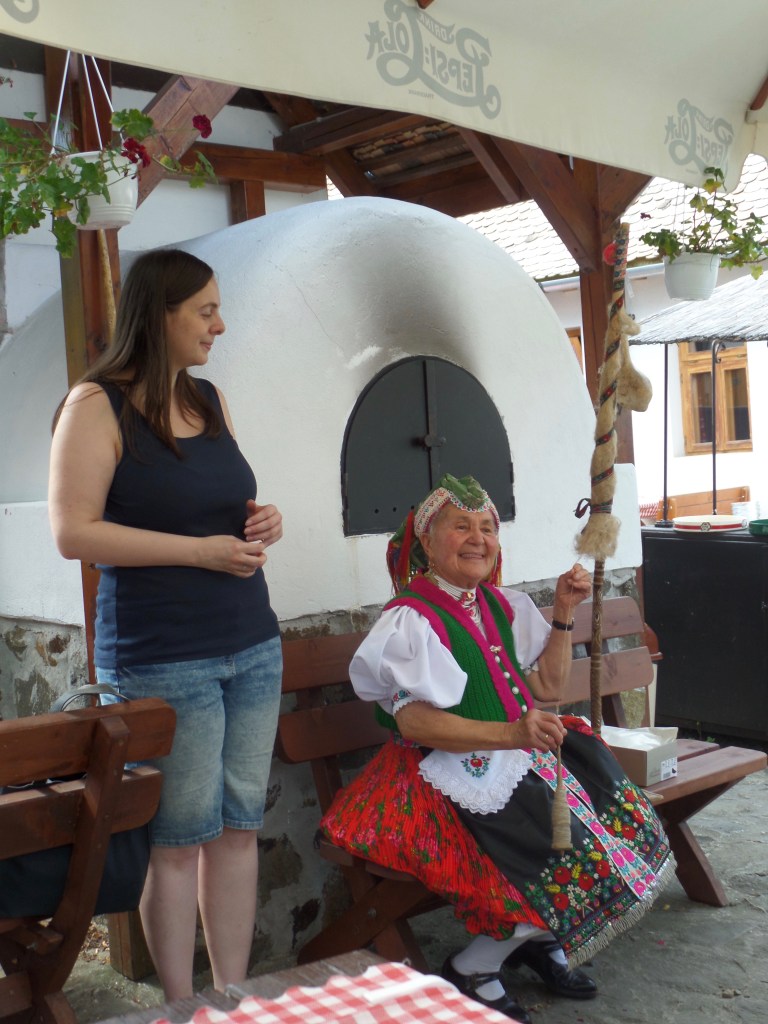
Hurray to Emese for translating! We all agreed at how smiley and spritely this Hungarian granny was. She is showing how flax was spun in some of the more rural towns, into the 1980s at least. Since spinning took so much time, and the girls were largely kept at home for propriety (although “once she gets married, her mouth opens”), the spinning rooms were the social centers for conversation and singing. The stick is built like an upside down “T”, and the story is that boys come a courting could come and sit on the other side to hold it down. We learned that when someone dropped her spindle, the boy would be quick to pick it up, and get his reward; a kiss. This old women told us that not only did some get to dropping their spindles rather often, but that if there was a boy a girl didn’t like, their was a way to tie a knot around the top of the spindle, “to make sure it would never drop.” It was this sort of thing that made me glad for Emese’s translating, which still allowed the stories to comfortably be told in their native language.
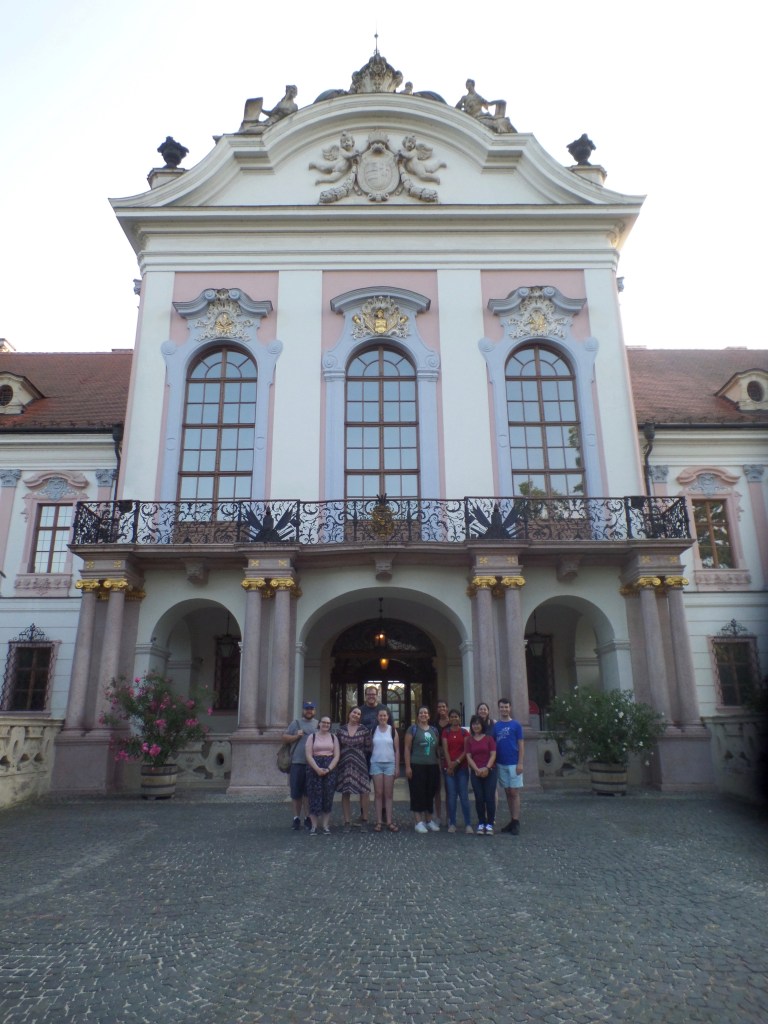
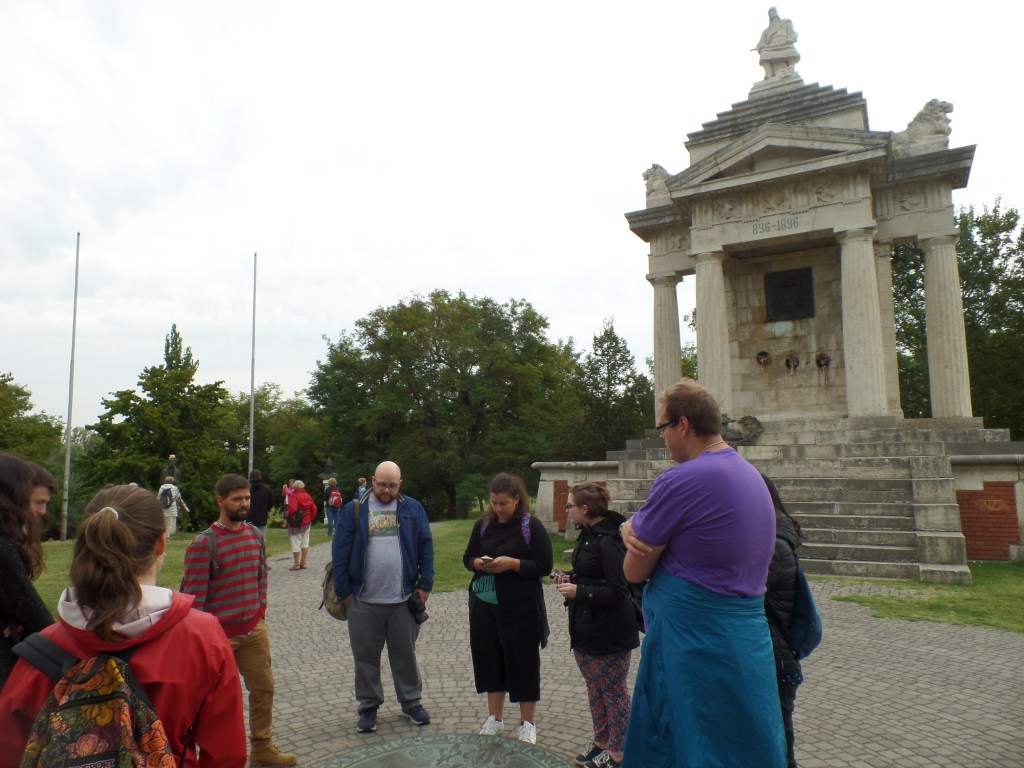
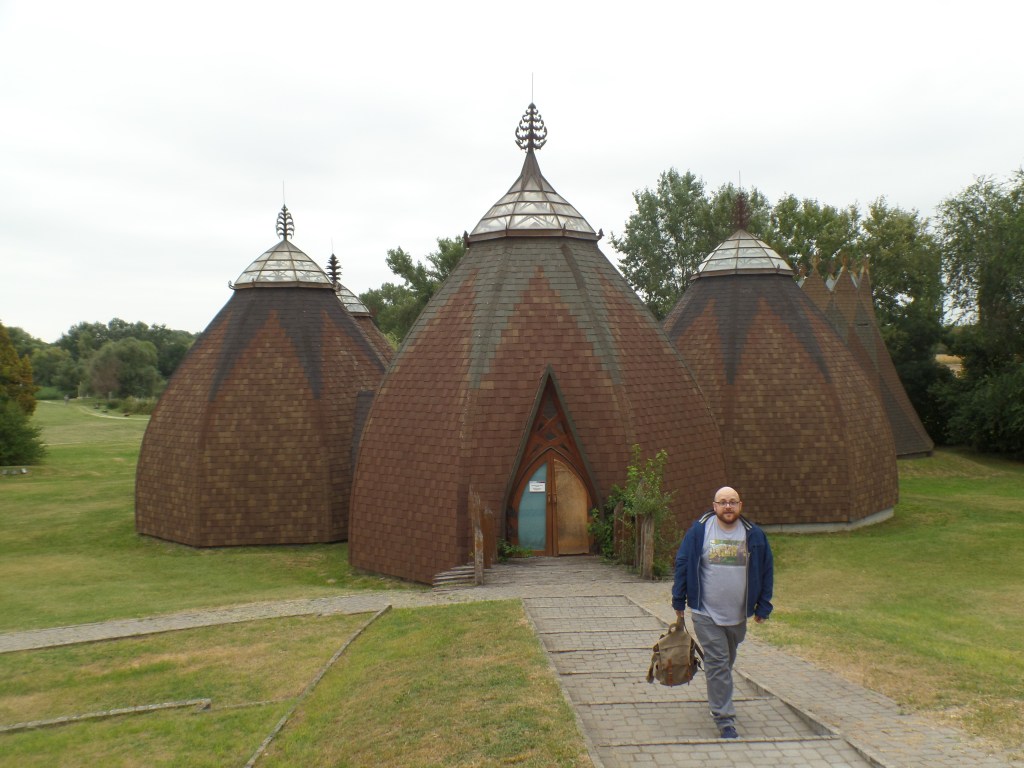
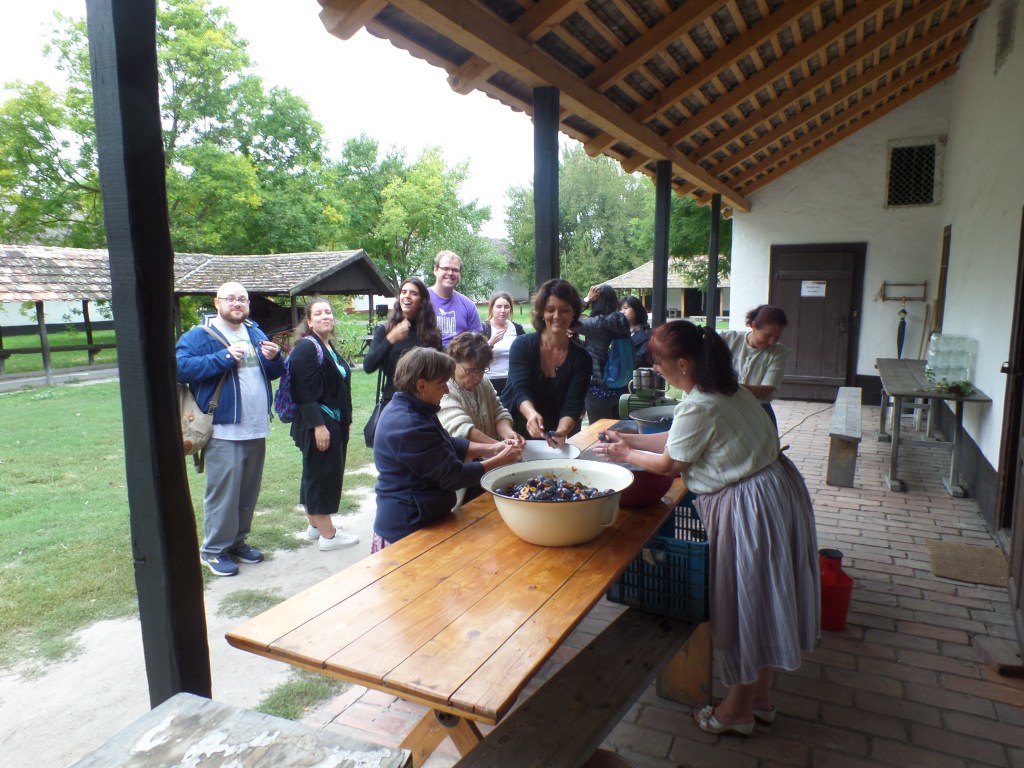
This is at the Grassalkovich Castle (more of a palace to my eyes) that hosted Hungarian royalty. (no pictures were allowed inside)At the Ópusztaszer National Historical Memorial Park. This is a monument that was erected for the 1000th anniversary of Hungary. The monument is surrounded by busts of the kings. Nearby is a building that hosts a 360 degree giant painted panorama of the Hungarian conquest of the Carpathian Basin. It 15 meters high on a piece of cloth originally woven without a seam, with a diameter of more than 35 meters. No pictures allowed, but here is a link to a picture that can be zoomed up on: https://proxy.duckduckgo.com/iu/?u=https%3A%2F%2Fwww.jacobson.nl%2Fpanorama%2Ffeszty.jpg&f=1&nofb=1Curious little buildings near the building with the panorama. We sang the canon for the day in one.At the same venue, we came upon some ladies pitting and then grinding up italian prunes.
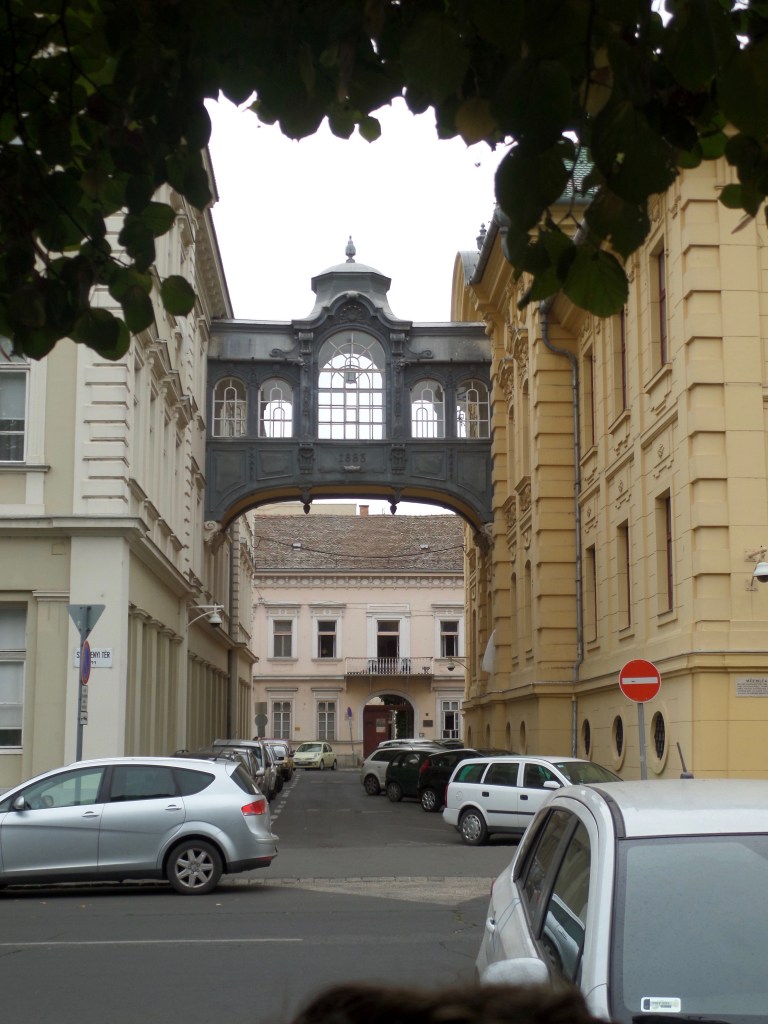
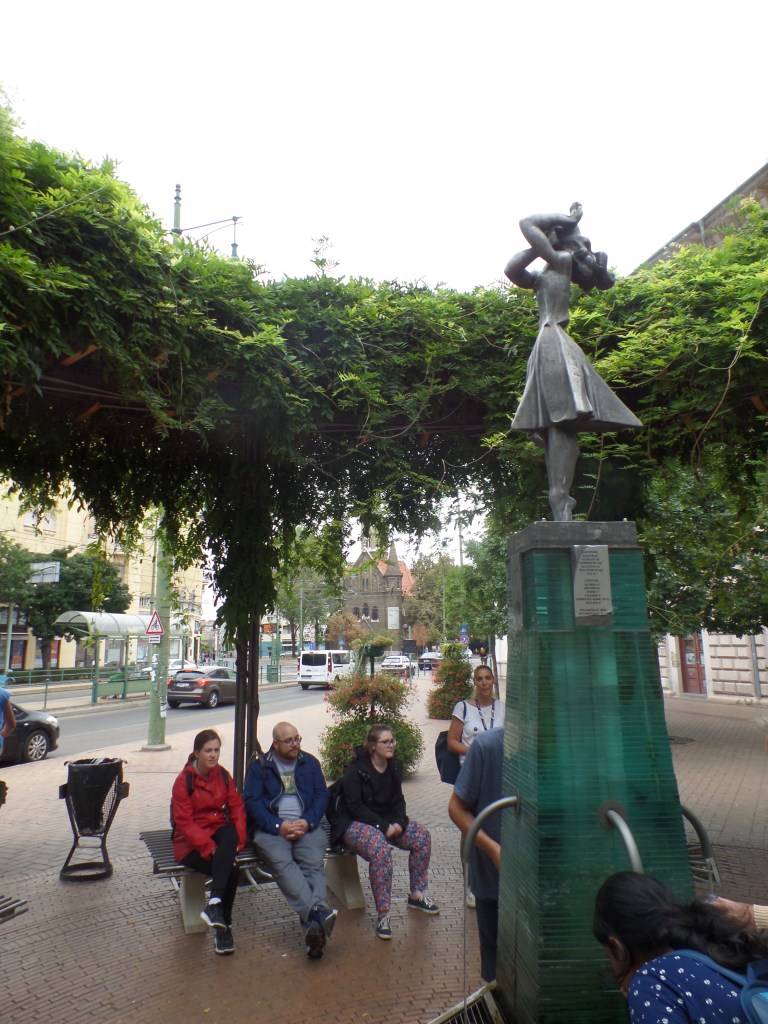
This is in Szeged, which is at the bottom of Hungary, very near to where Serbia and Romania touch. We learned that the Hungarian towns made a big deal when famous royalty passed through their towns, and remember these events in their histories as important facts. Several times in various cities we heard things like “so and so stayed here for one night so many hundred years ago.” This overpass was built for the one day one particular king came through Szeged so he wouldn’t have to go outdoors to go from his rooms to the dance hall.
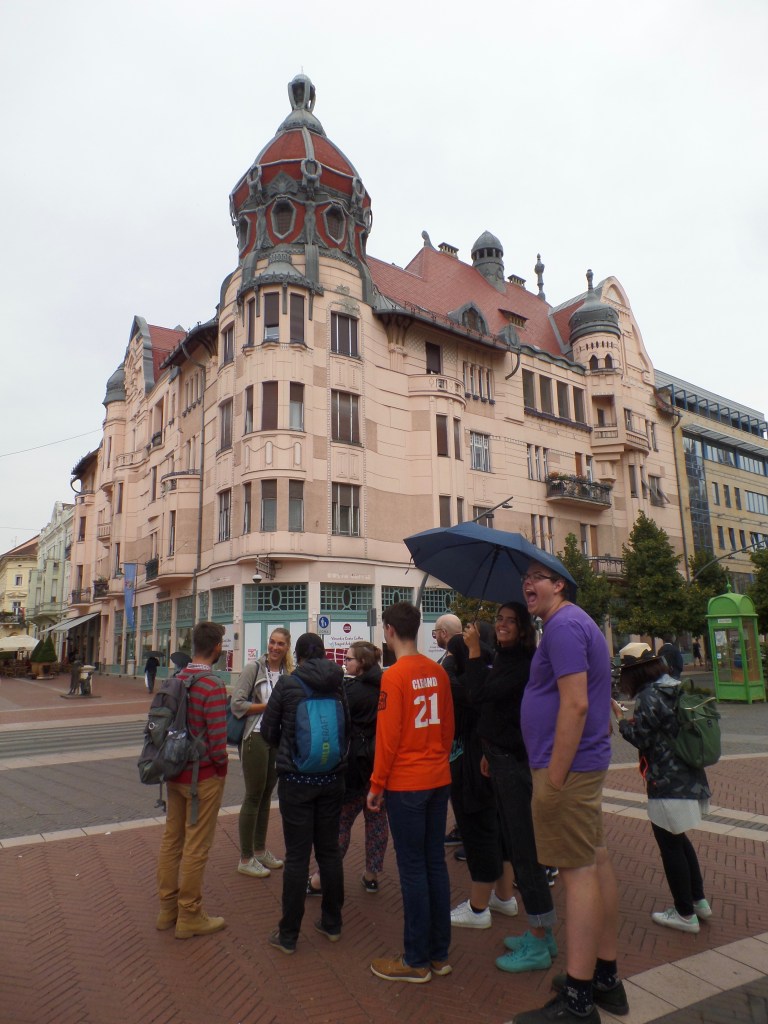
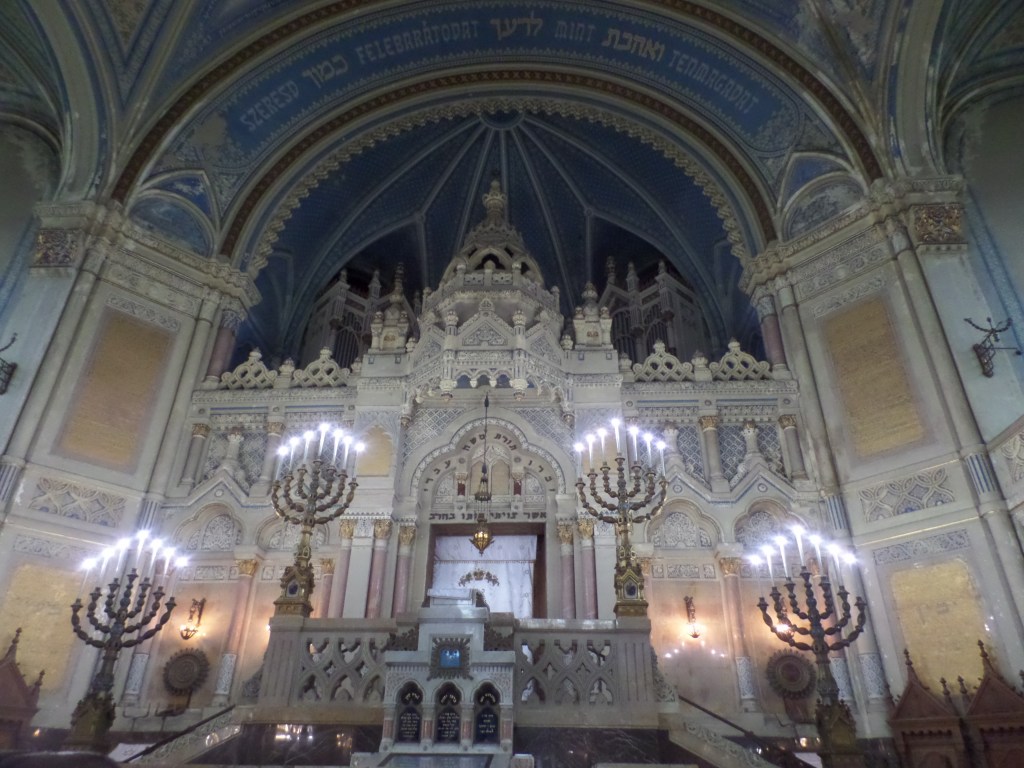
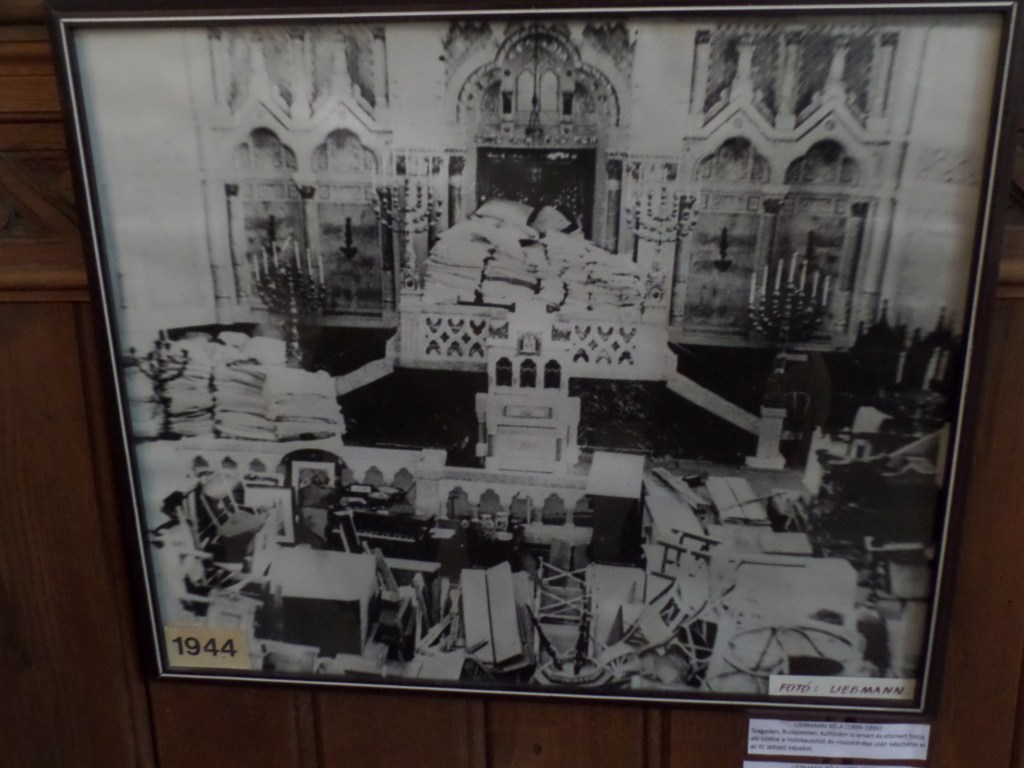
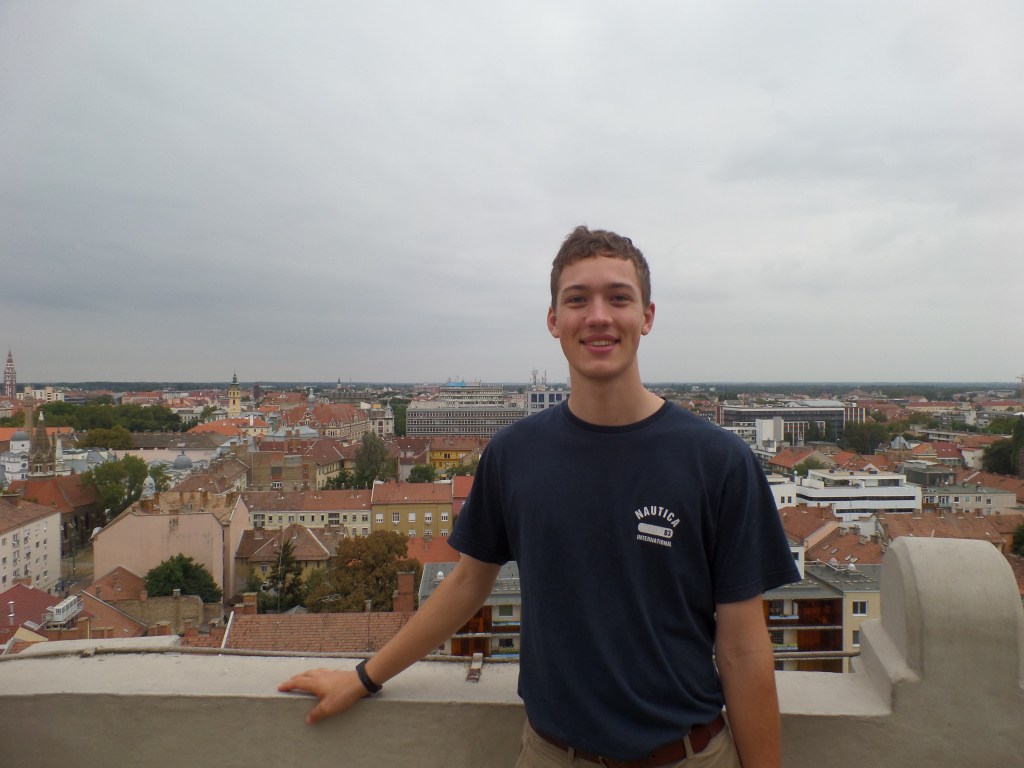
In Szeged on a walking tour. This is one of the art nouveau buildings that have seemed quite prevalent in Hungarian cities. We pass by one in Kecskemét every day on the way to the Institute, and apparently there is even a folk song about it. The story about the building in the picture above is that the female figures around the top were originally nude, but the wife of the city leader who hired the architect for this residence was not appreciative and got the figures to be at least a little clothed. This is the big synagogue in Szeged, the “most beautiful in the world” according to our guide. It was taken over during the WWII and used, of all things, as a store/warehouse. I wondered whether the twisted allusion had been instigated consciously as an offense to John 2:14. John 2:13-17 King James Version (KJV) 13 And the Jews’ passover was at hand, and Jesus went up to Jerusalem. 14 And found in the temple those that sold oxen and sheep and doves, and the changers of money sitting: 15 And when he had made a scourge of small cords, he drove them all out of the temple, and the sheep, and the oxen; and poured out the changers’ money, and overthrew the tables; 16 And said unto them that sold doves, Take these things hence; make not my Father’s house an house of merchandise.Here we “took the waters” of Szeged. It is a spring sought by many to drink of its warm, mineral waters. I filled up my whole water bottle and drank it over the next day. I was glad to find out that the sulfur smell did not really translate to the taste. Up, up, up the circling flights of stairs to the top of the water tower!
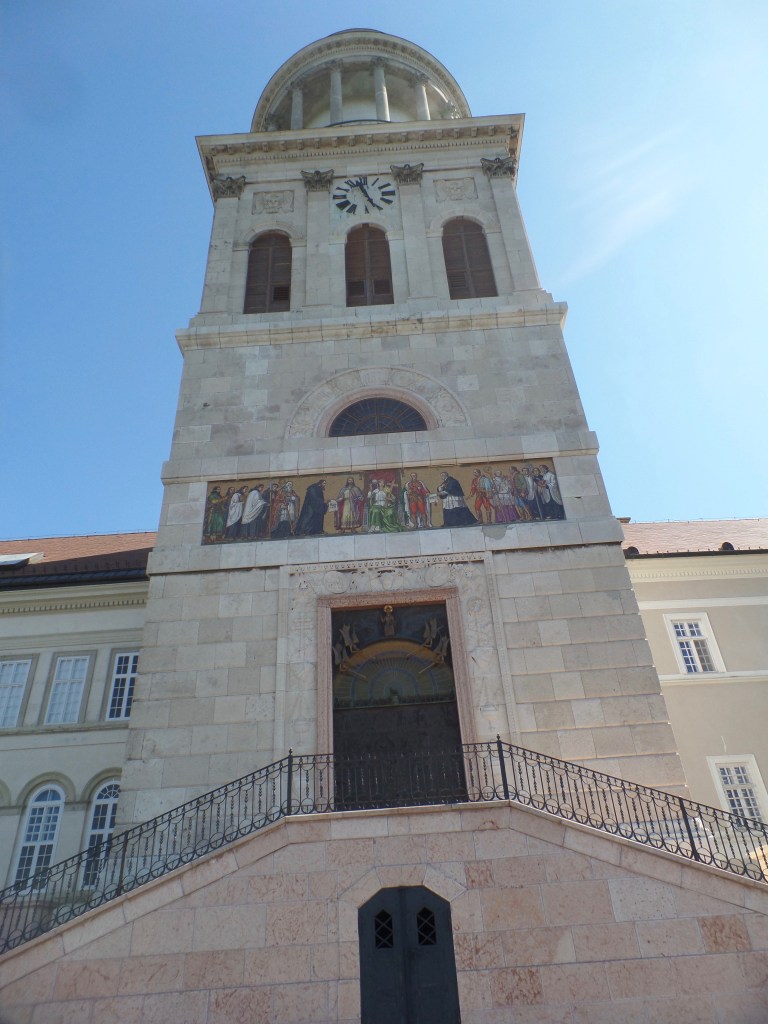
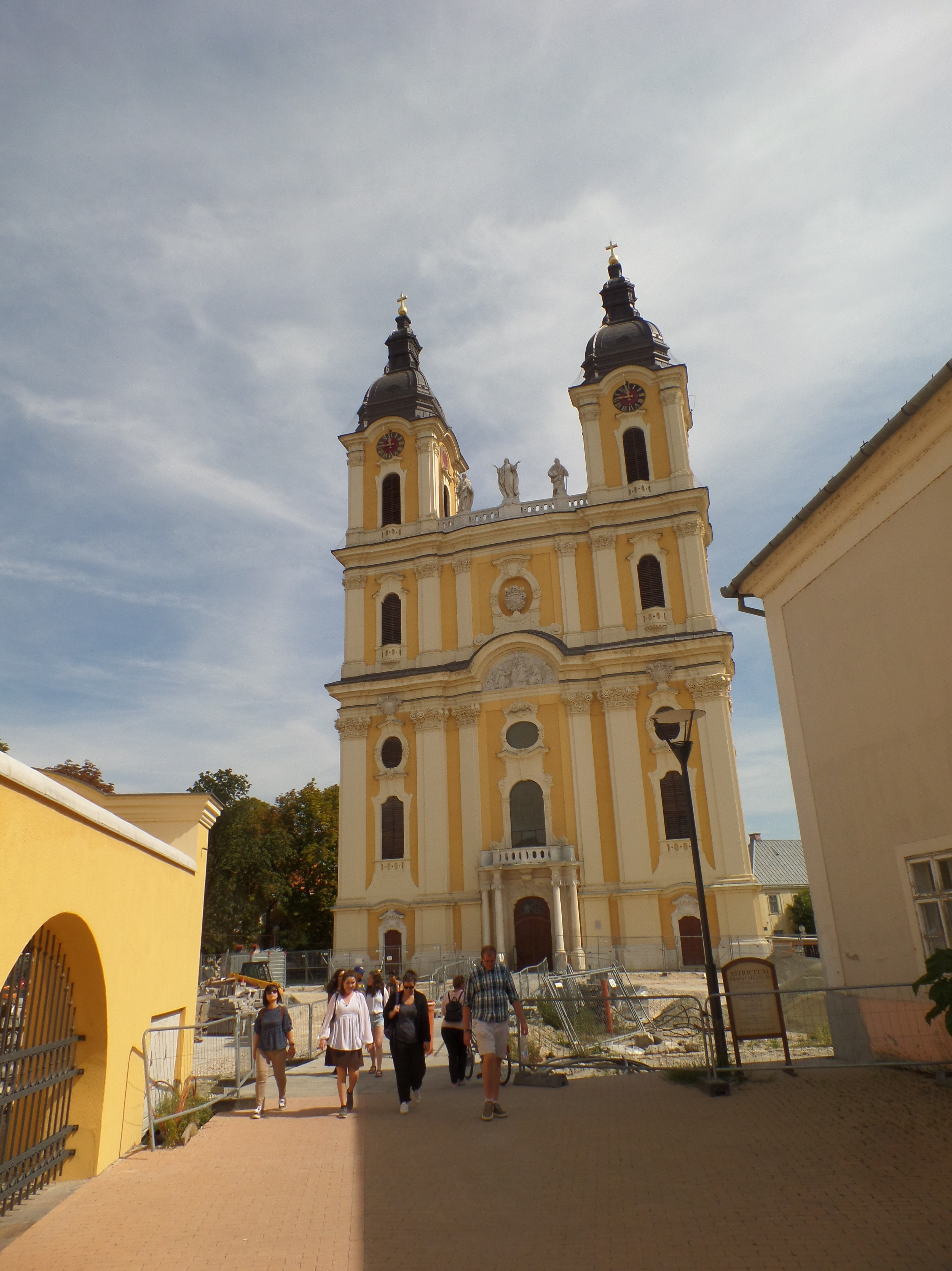
The Benedictine Abbey of Pannonhalma! This was up on the high region of Hungary (rolling hills), so there was a very good view. It is as old as Hungary, founded in 996, and has the oldest surviving document with Hungarian text, part of a decree in relation to the monastery signed by King St. Stephen himself. King St. Stephen was the first settled King of Hungary, crowned in 1000AD by authority of the Pope, and who converted the Hungarians to Christianity in order to stabilize their permanent position as a non-threatening neighbor country in Europe. His name is one that comes up a LOT in Hungarian history.
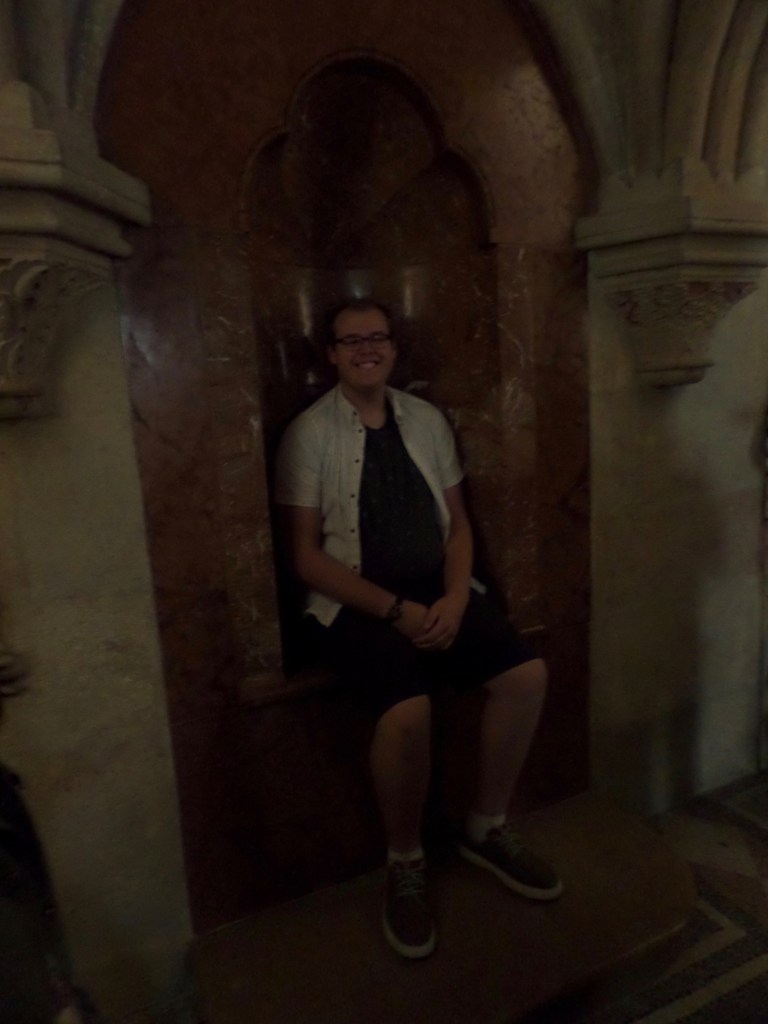
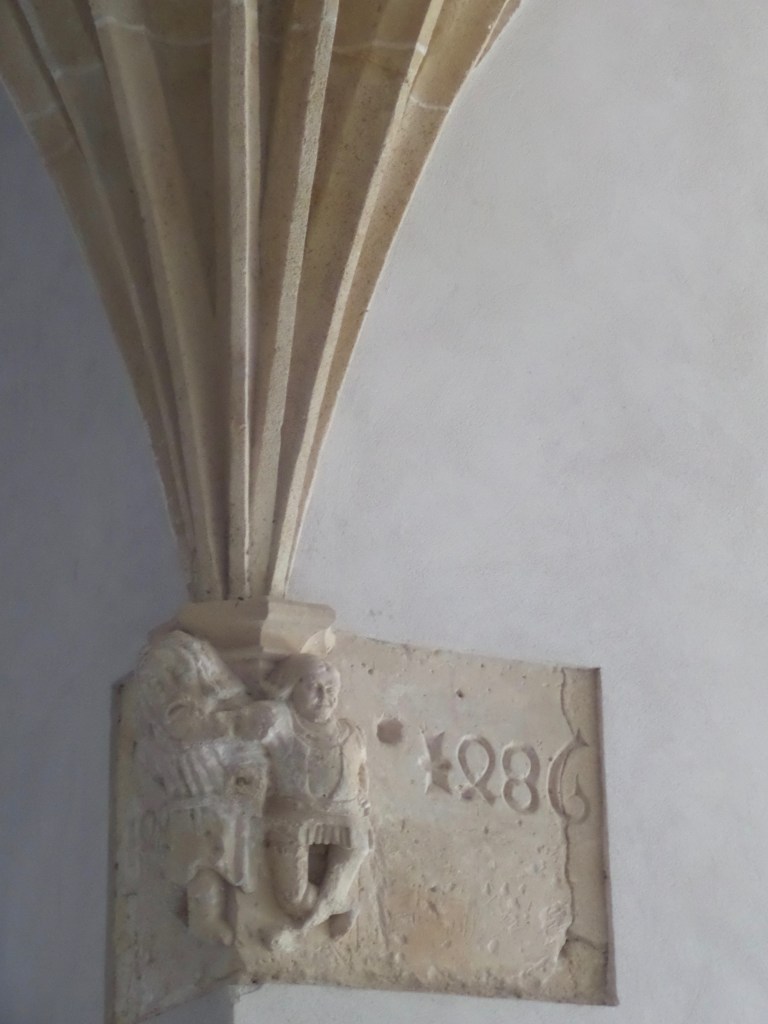
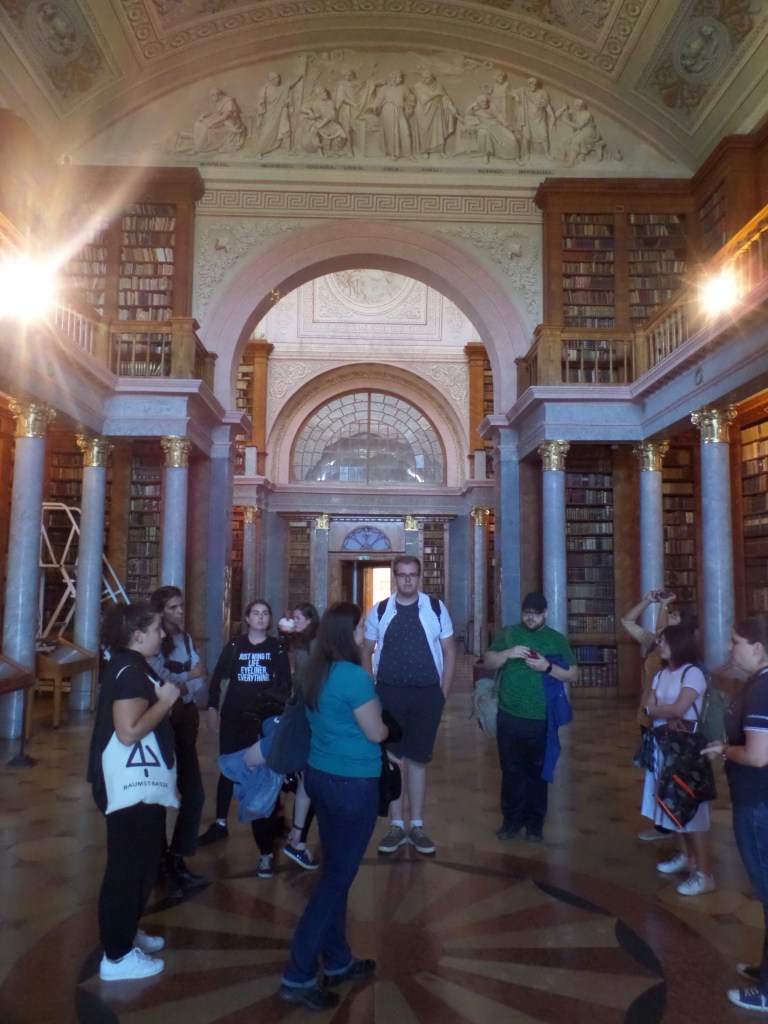
SAMSUNG CAMERA PICTURESGareth is sitting in King St. Stephen’s seat in the crypt at the monastery. It’s story is that if one can touch their back to the back and feet to the floor while sitting, they are worthy to be king of Hungary or something. As you can see, Gareth is getting a kick out of doing this. King St. Stephen was apparently quite tall, so he could do it. Gareth is 6’8″. Can you read this date inside the monastery? I learned that the second symbol is the old style of writing the number “4”: it is half of an 8! So, the date reads 1486.The huge library. When it was built, they didn’t have enough light, so they used mirror “windows” to funnel the light down from cupola at the top of the roof. You can see one of these sets of mirror panels at the back of the picture. This library is still in use by the school at the monastery and by the public (although I’m sure you couldn’t take home some of the centuries-old books).
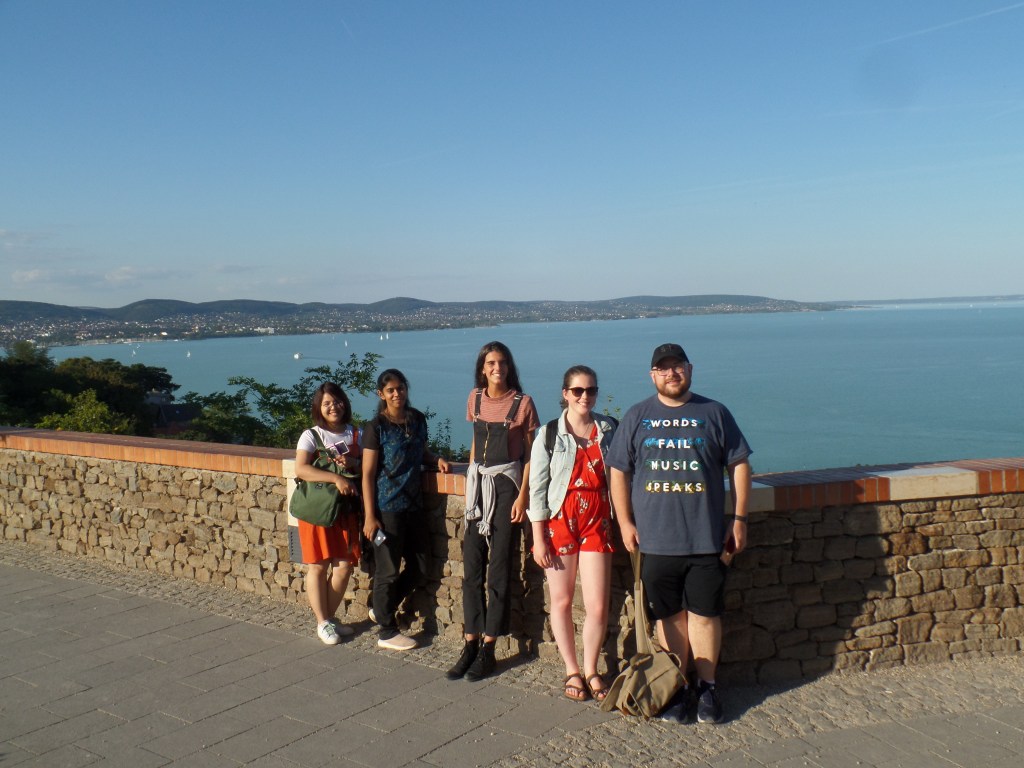
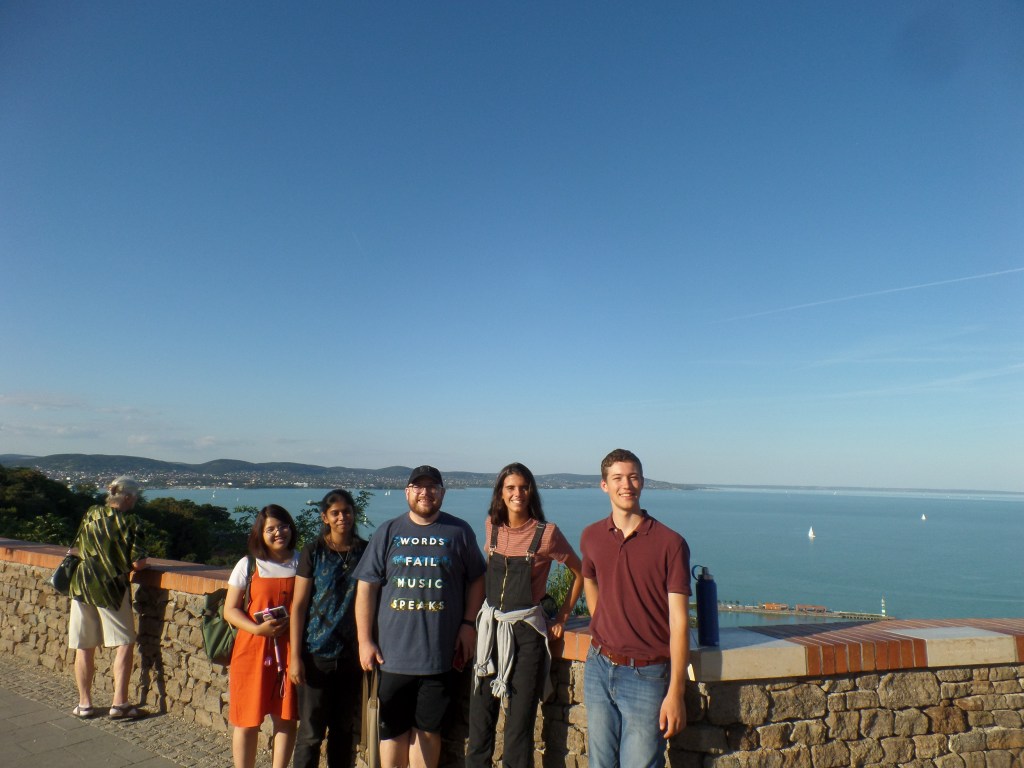
We stopped by the end of Lake Balaton, the huge Hungarian lake.
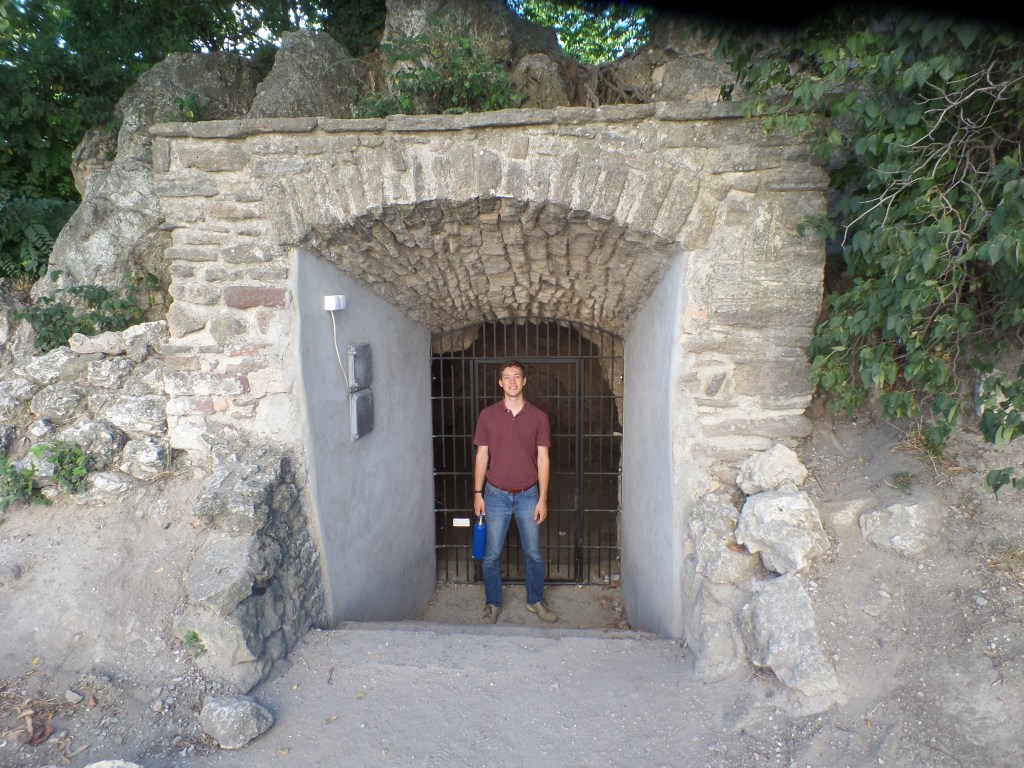
Carmen, Aditi, Theresa, Sarah, Robert over Lake Balatonthe other picture is better, but perhaps my family will have a slight bias towards this one…Also above the lake was a “real Hermit’s cave.” I told Gareth that a picture with me in a real hermit cave was something I suspected my family would want to see, so just take the picture for me please. 🙂
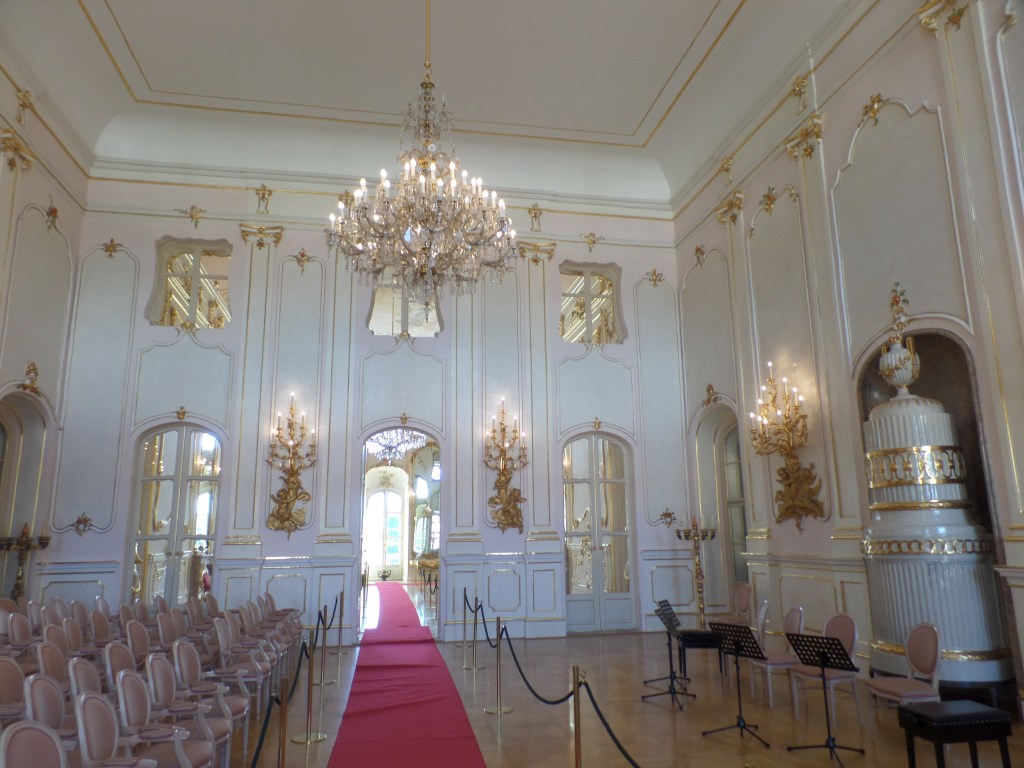
Eszterházy Castle. Musical home of Haydn. If I remember correctly, this is the very room where the Haydn’s Farewell Symphony was first played, pointedly.
That is a stove for heating on the right side. For these big palaces, there were little tiny child-size passage ways leading from the hallways to the backs of the heaters, where the fires could be started and tended without any disruption to the royalty in the room.
Pictures were not allowed in the main music hall, but there were several interesting things about it. It was a big, tall box, that would seat 150 or so at most. It had very good acoustics, so much so that Haydn’s orchestra was too loud in the room itself, so they would put them in a long room on the second floor, from which there was a window cut for the sound to come down to the audience. Apparently even then it was “still too loud”! We all did get to sing in the room, which was very nice. The surface of the walls makes for good acoustics because they are imitation marble. It blew my mind, but the Eszterházys chose imitation marble specifically because it was the most expensive material out there. They could have used real marble, but it wasn’t pricey enough, I guess. This was strange to hear: I never have, and probably will never in the future use that criteria for choosing what to buy, and how to decorate!
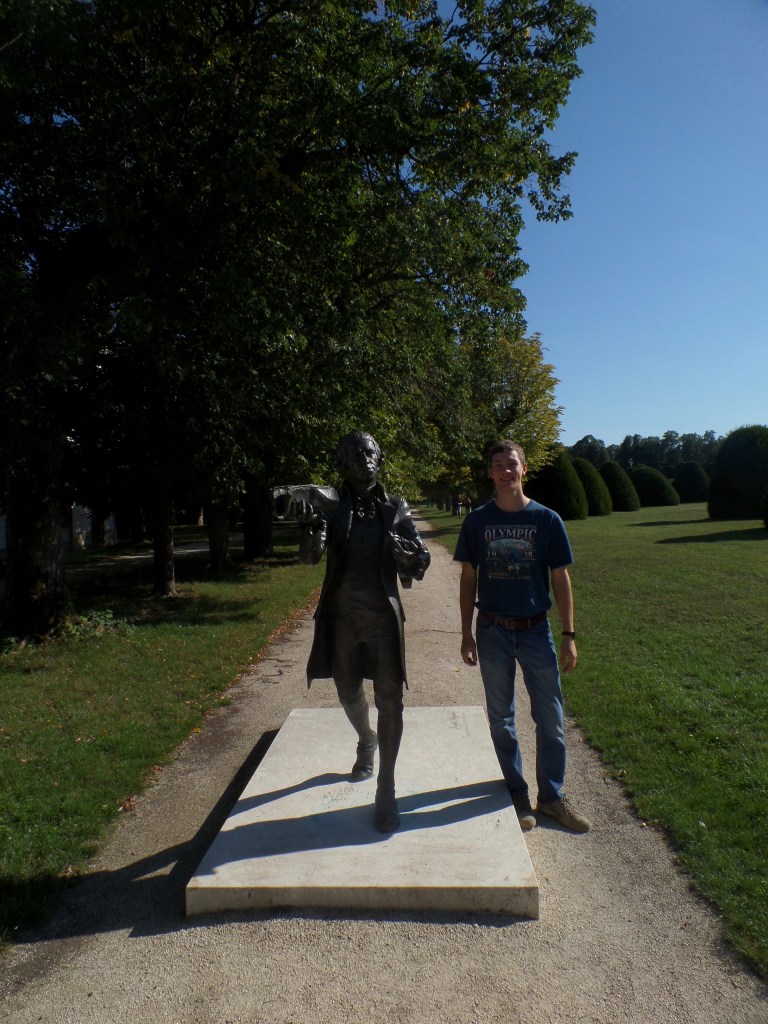
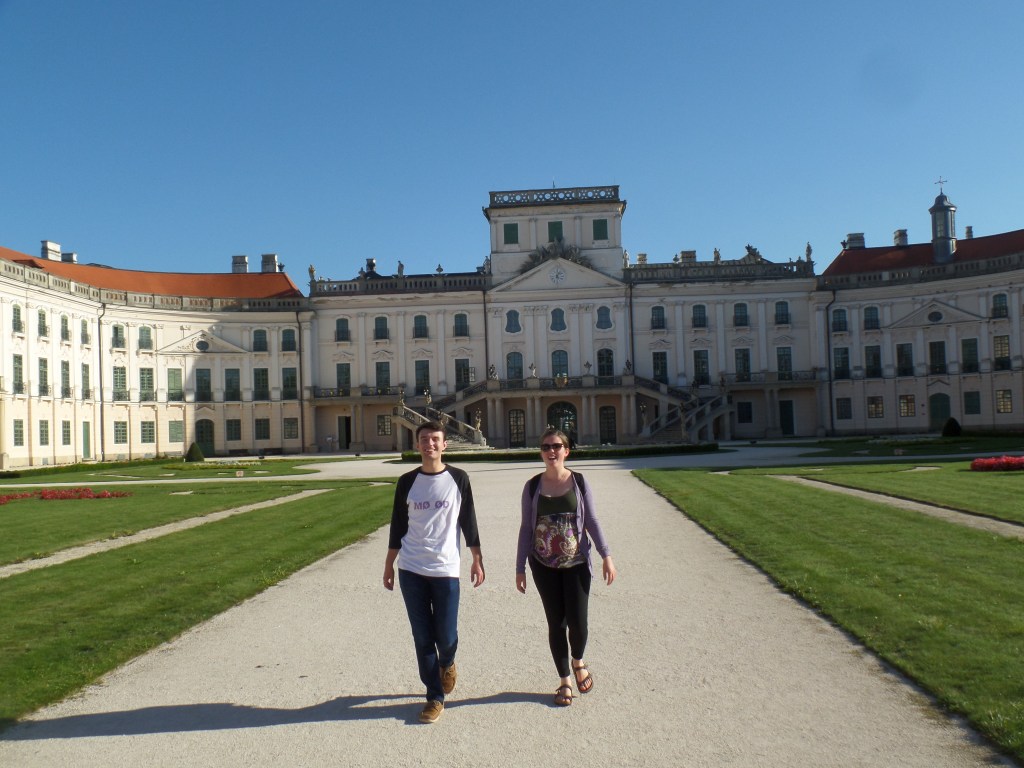
with HaydnThe “castle” palace is mindbogglingly huge. The picture shows perhaps half of the ONE building.
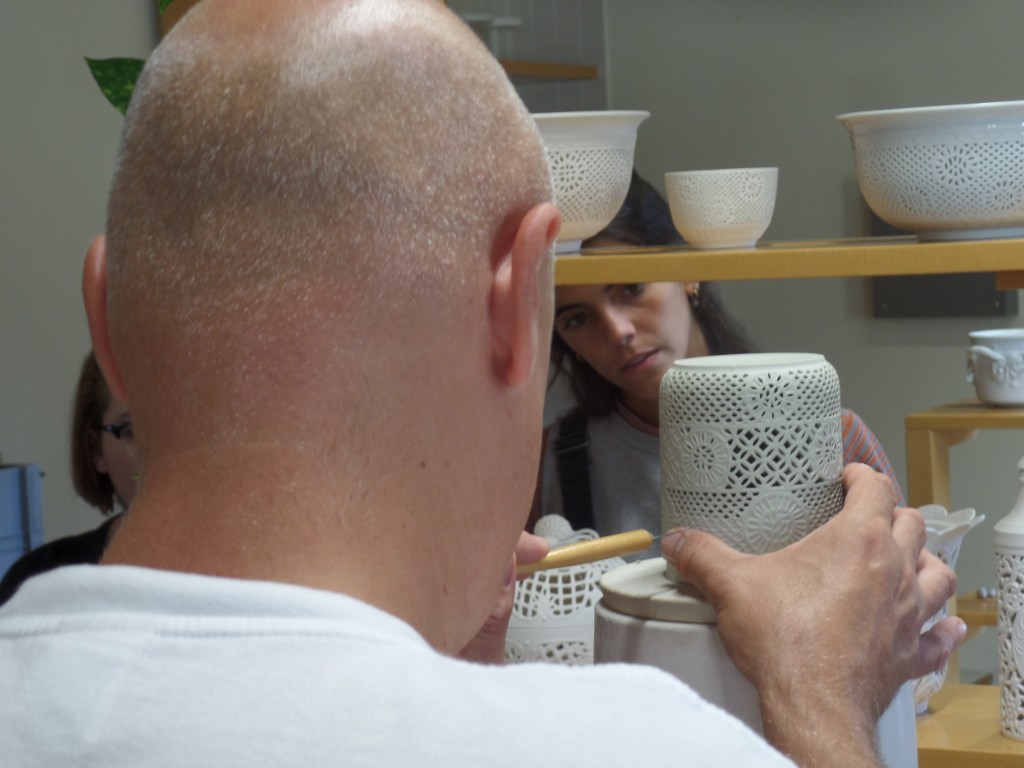
As I mentioned at the top, the Herend Porcelanium was one of my most favorite parts of the week. I did not realize how much time goes into every single piece they make. Those who make it (all by hand) have to spend 3 years training before they can be hired. They have to produce consistent perfection, and do, somehow. We learned that painting a single plate can take a whole day of work, depending on what the pattern is. Every hole is hand cut, every part is hand painted, often without any pattern. The product is expensive, but it would be wrong if it wasn’t. I don’t remember seeing any workmanship at this level before. It’s worth seeing, especially because it is such a contrast to so much of the world we live in today.
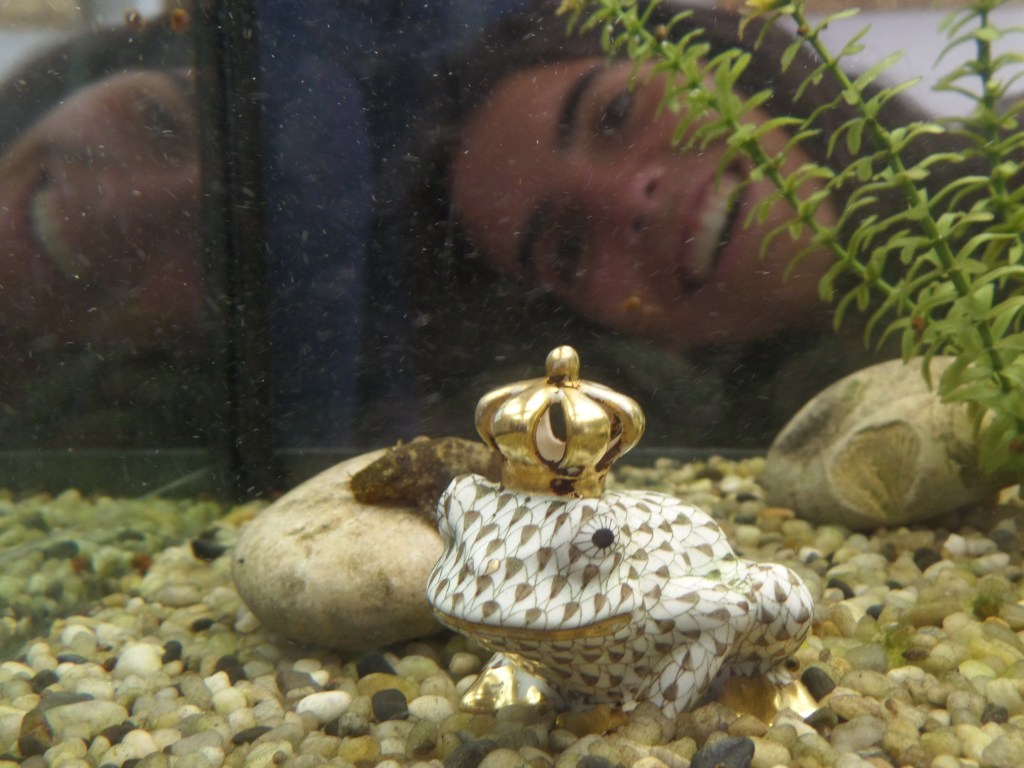
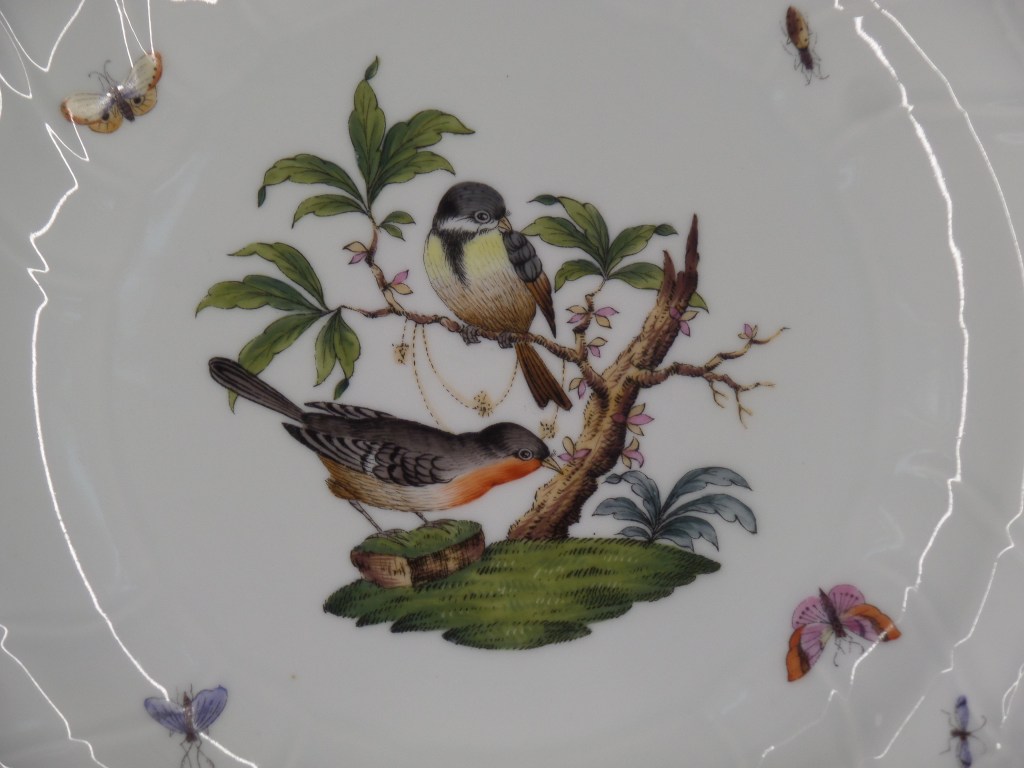
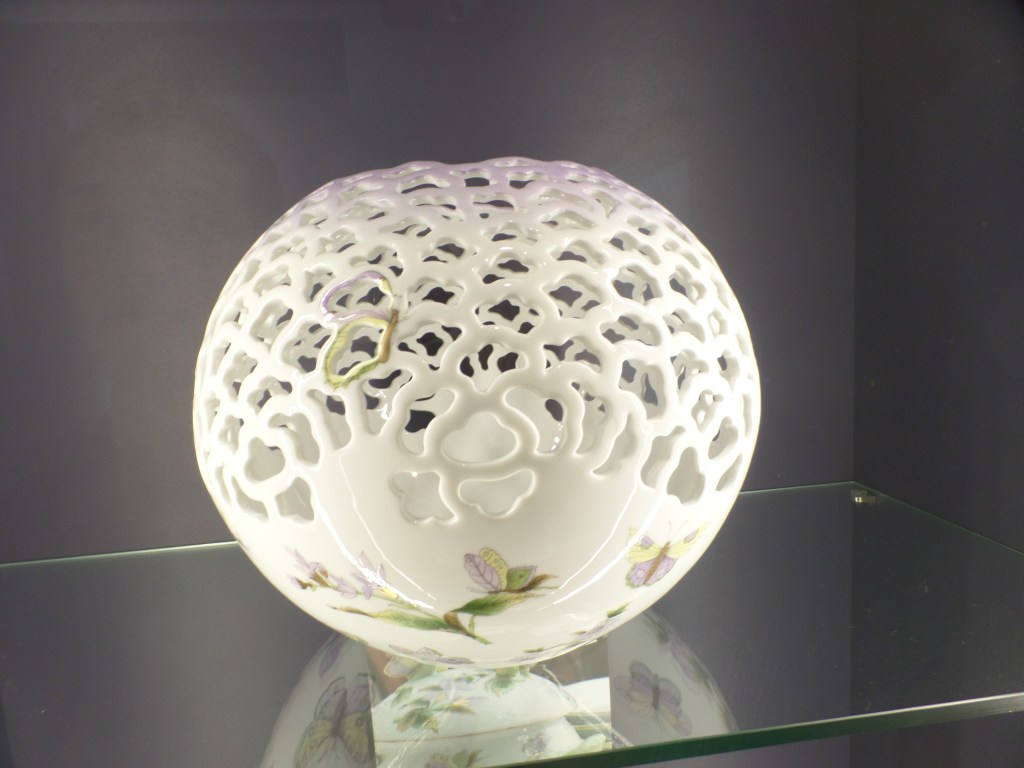
Every hole hand cut. No mistakes allowed. They said that doing just the holes on this one piece was practically work for a whole day, or most of one.SAMSUNG CAMERA PICTURESThis scale pattern is very characteristic for their porcelain animals. This is the pattern custom made for Queen Victoria, when she bought a 200 piece set for Buckingham Palace. Prince William and Kate have a more purple edition of this now.This is one of Herend’s special designs. I believe the story goes that the American Rothchilds were visiting, and the Madam lost her jeweled necklace. It was found hanging in a bird’s nest.Carmen and GarethAs I mentioned, every hole cut by hand
On to the Archbishopric town of Kalocsa on the last day!
We saw an exhibit of some old and fancy bishops’ robes (this is the slightly overly mundane summary), and were treated to an organ concert in the cathedral. It was good, but the acoustic was really too much, and in my opinion the organist took one Bach piece just a bit too fast for the space–thank you, Mr. Kriewall 🙂 — and at some points seemed to be using more stops than necessary to show off. (This reminds me of Norbert, and his view that just a few well selected stops are nearly always better than a horde).
Aditi (India), Laura (Australia), and Jackson, my roommate (Ohio)
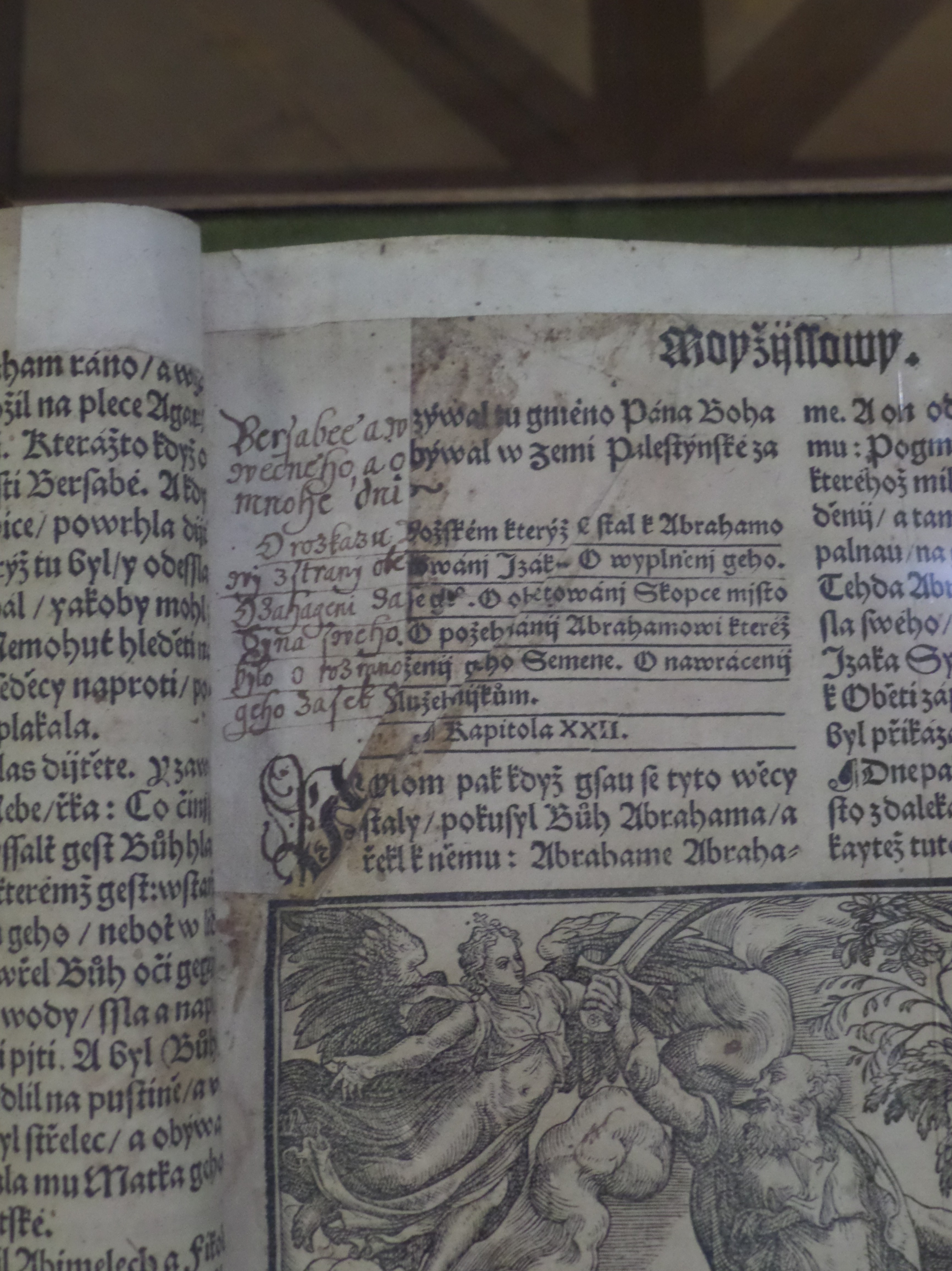
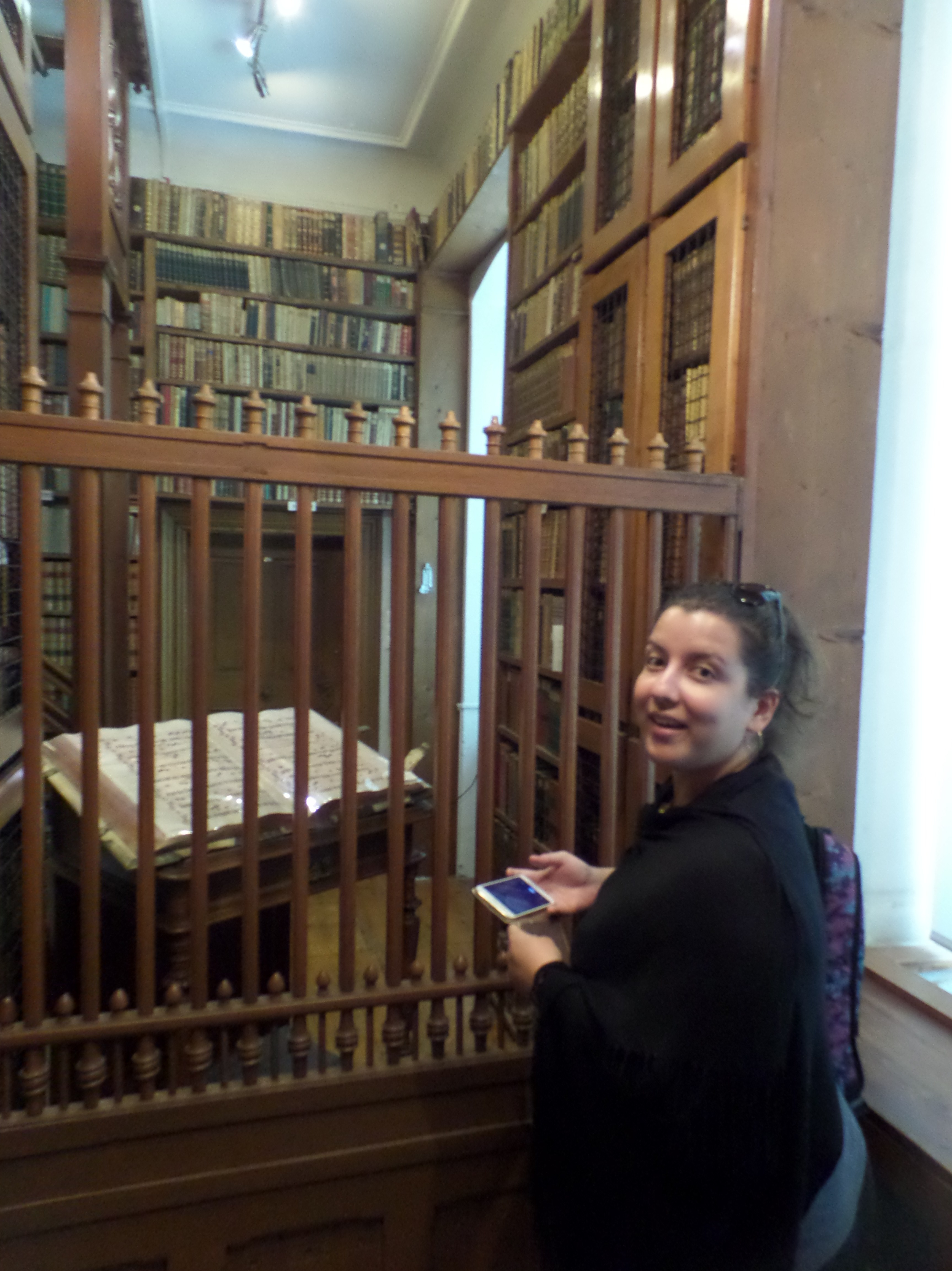
They have a very old library, with very old bibles and music, among other things. I was highly entertained by seeing this one:
Somebody spilled their coffffeeeeeeee…. “Who, me? Yes, you. Couldn’t be! Then who???????”
A readable music score!!!!
There is also a thousand-year-old skeleton of the bishop who crowned King St. Stephen himself, in full view.
I chose NOT to take a picture.
Intriguing and perhaps impressive for being so old,
but,
not exactly picturesque.
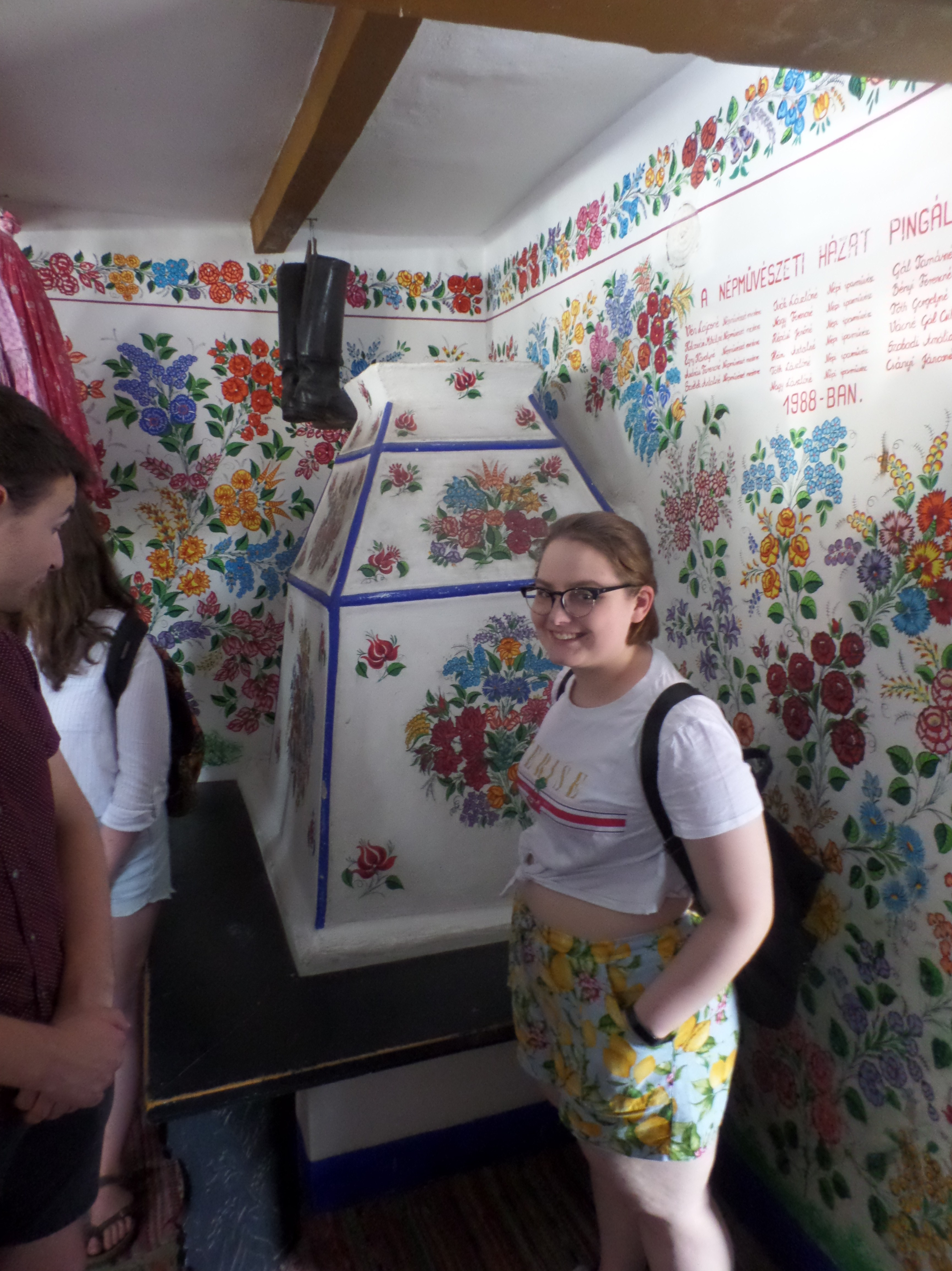
We then went to a little tiny museum about paprika (brought back in the few years after Columbus first discovered the Americas), which also had the old style Hungarian house. Below is a picture from the “good room,” which was kept very neat, clean and tidy, and as we learned in Hollókö on the first day of the week, was the room for childbirth and the first period of an infant’s life. The walls are hand-painted.
SAMSUNG CAMERA PICTURES
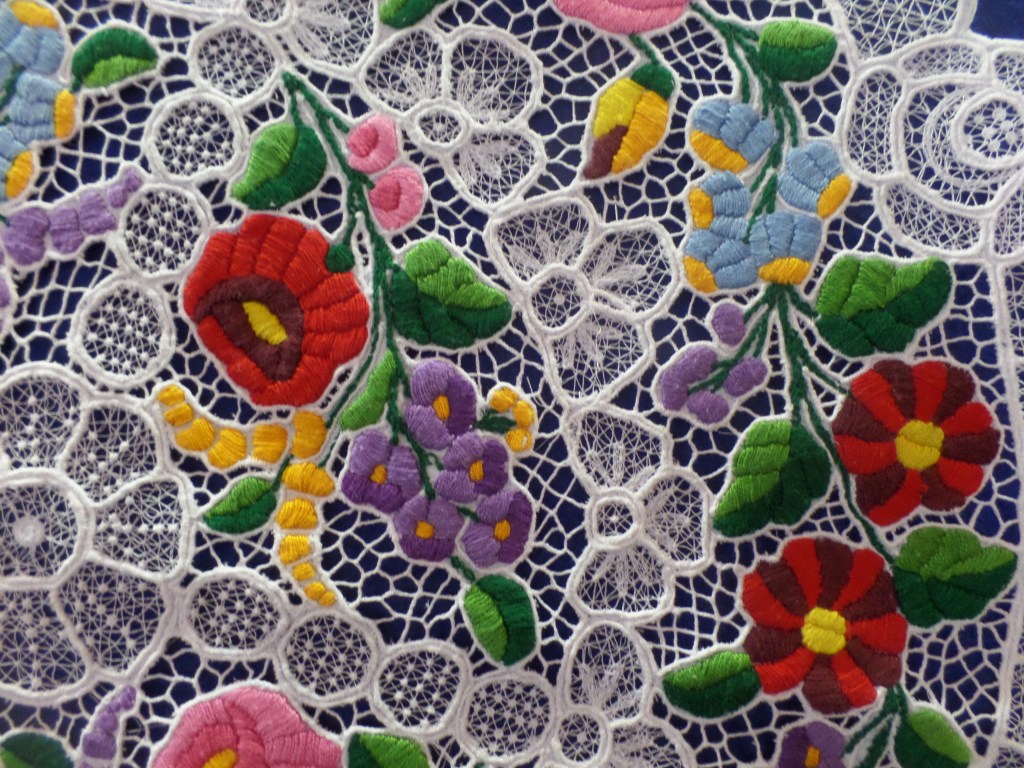
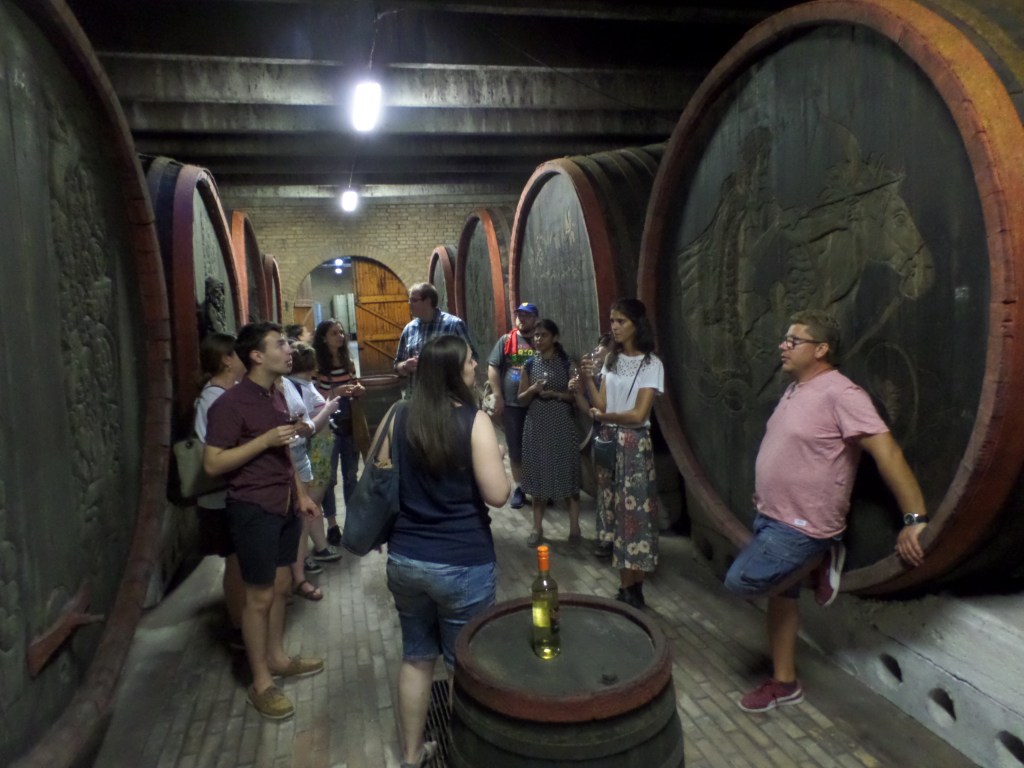
The lace of Kalocsa. This style became popular during the Communist era, and is actually imitation lace. After sewing the flowers on to solid fabric, the majority of the holes are cut out individually!We ended in the wine cellar village of Hajós, which has about 25 km of wine cellars crammed underneath the vineyards. The owner (pink shirt) said that half an hour before we came he was out with the workers pressing grapes. Here are the 40 year old wooden casks he has in addition to the tunnel-style cellar with mold surrounded bottles–an indicator of the right temperature– and a few grape roots peeking through the curved clay ceiling). They have images carved on the front, and if I remember correctly, each hold at least 17,000 liters. We got to go inside of one, 8 of us at the same time! Several of my classmates bought wine after the wine tasting: some of it was quite good, as well as being around $3 a bottle. (this low price has now been beaten–someone said they got very good Roset for about 1 euro at the Aldi in Kecskemét.
 Hungary4Harmony
